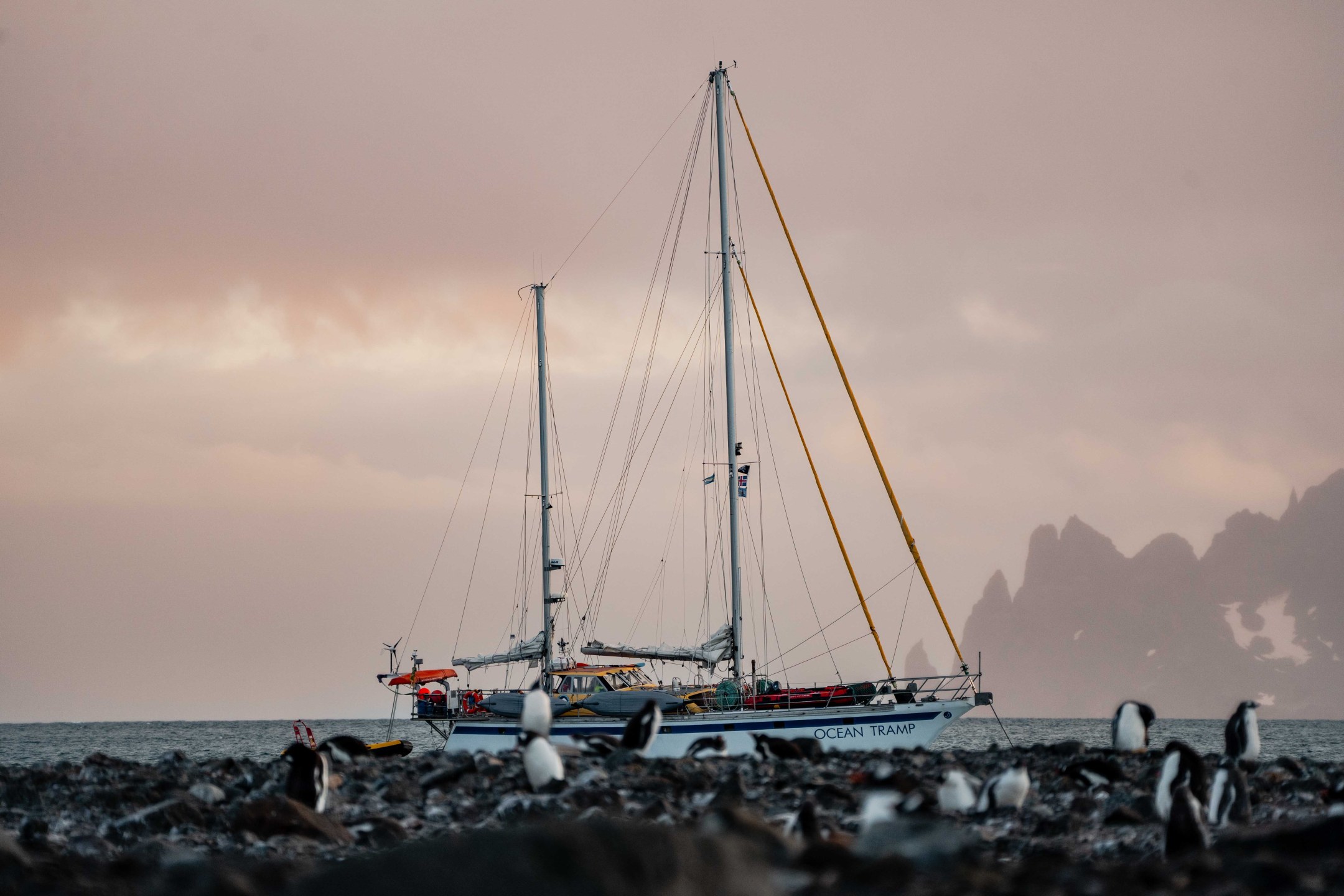
Monica and Albert have recently returned from a small group hiking and sailing Antarctica Expedition of epic proportions, literally!
There’s the trips you take, and then there are journeys that rearrange your sense of scale entirely. Traveling to Antarctica is one of those rare experiences that dismantles everything you thought you understood about grandeur and solitude. It’s an immersion into the last true wilderness on Earth, where the ice glows blue beneath the water surface, where silence stretches for miles (at least once you’re far away from the chatter of penguin colonies), and where wildlife inhabit the land and seas virtually unfazed by your presence, because human presence is still a rarity.
This is our 2026 trip recap of our sailing and hiking in Antarctica Expedition – a journey to the last true wilderness on Earth.
Before diving into the daily highlights, experience the journey firsthand.
Day 1-2 – Punta Arenas: The Journey Begins with a Change of Plans
Before even reaching the continent, Antarctica reminded us who’s really in charge.
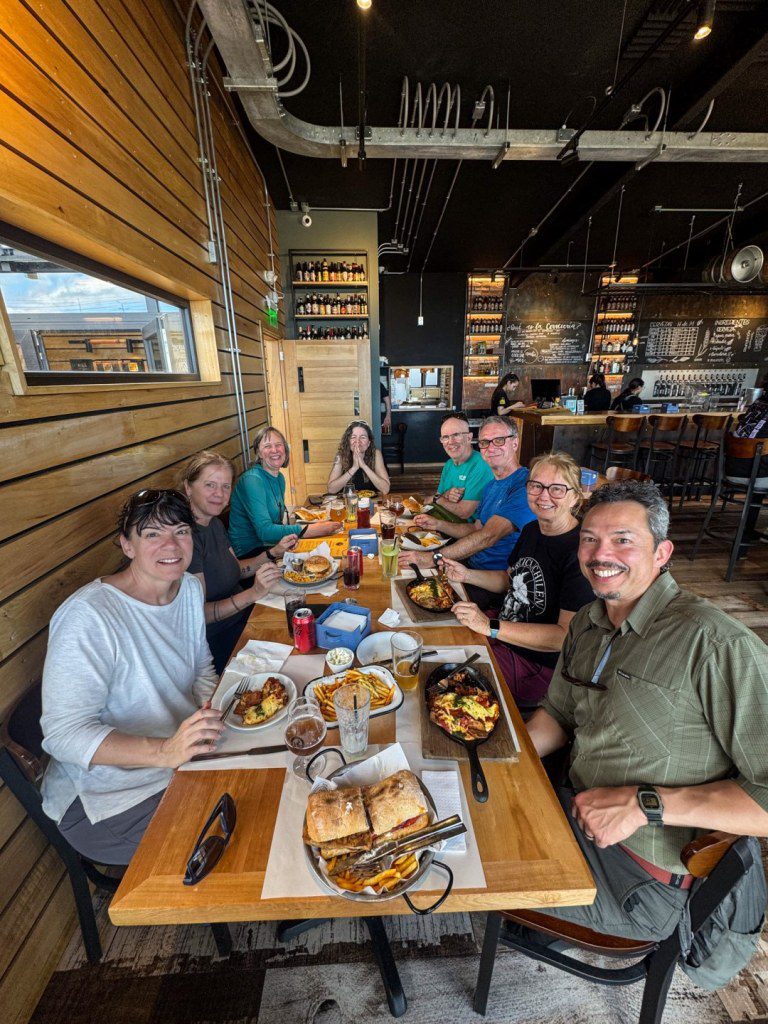
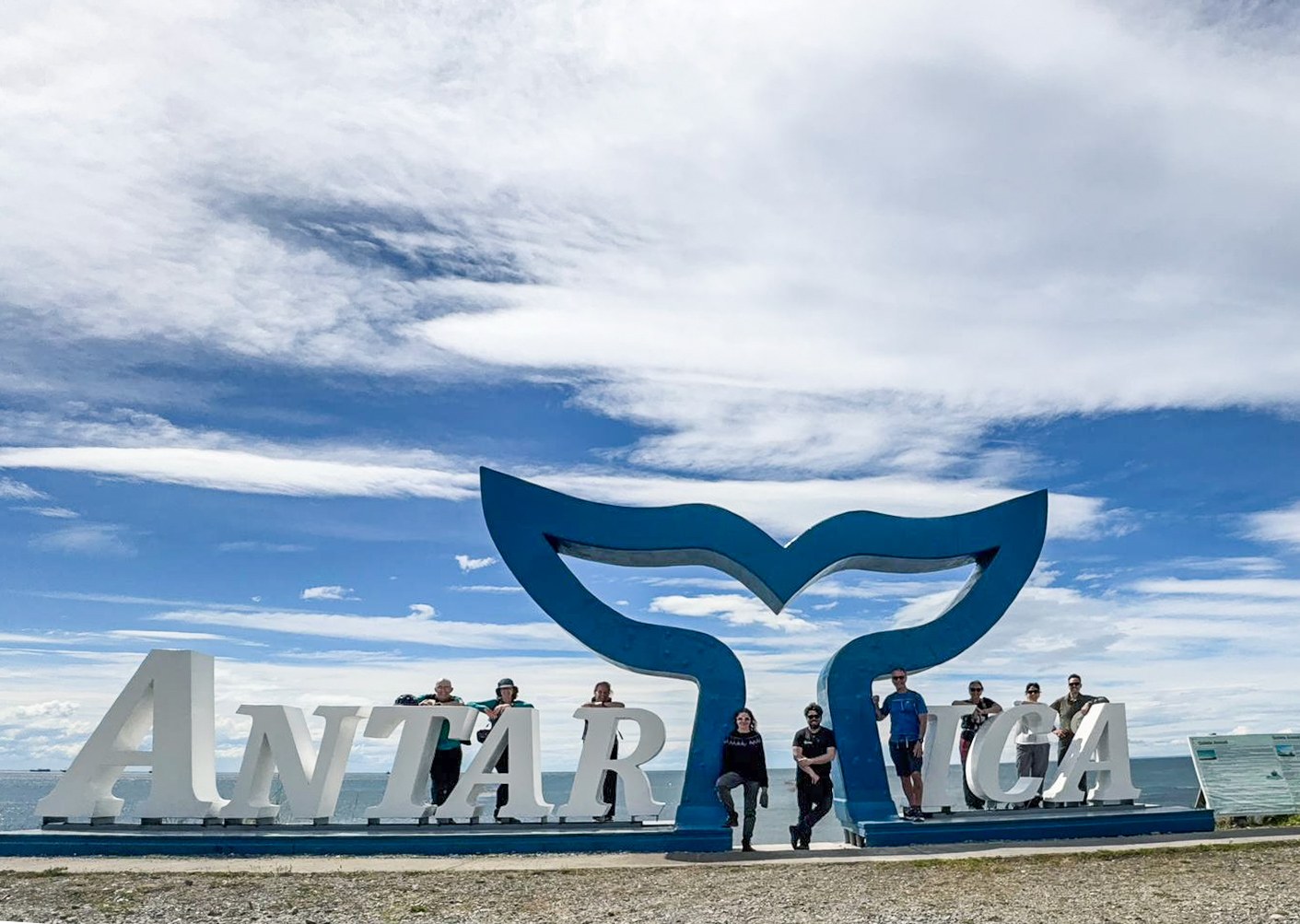
Our flight to King George Island was delayed two days in Punta Arenas. Our initial reaction was a little flustered with logistics rejigs and recalculating timelines while we watched the weather like hawks… But Antarctica travel teaches patience quickly, and what felt like a setback turned into an unexpected highlight.
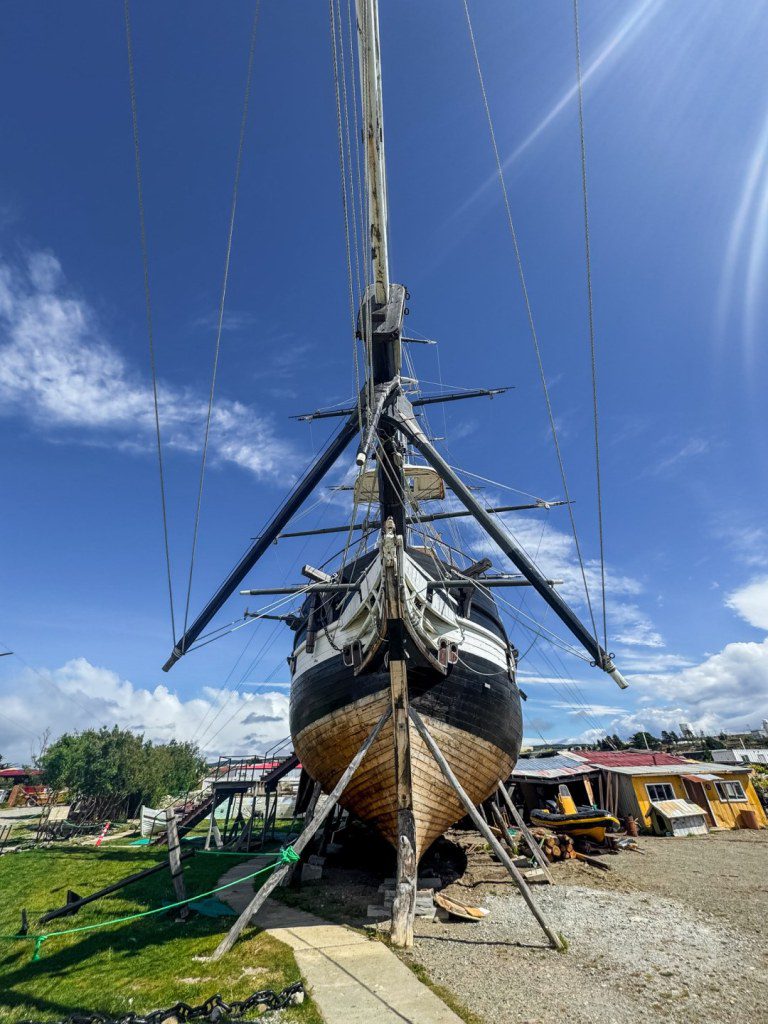
With two days to kill, we explored the region by bike and e-bike, riding along the windswept coastline and through quiet neighborhoods that feel like the edge of the inhabited world. One of the most memorable stops was the outdoor maritime museum along the Strait of Magellan, where full-size replicas of historic exploration vessels stand anchored on land including the James Caird, the small lifeboat used in Shackleton’s legendary rescue journey, as well as replicas of the Nao Victoria and the HMS Beagle.
Already, this Antarctica adventure travel experience was beginning to blur the line between history and present-day exploration, and we hadn’t even set foot on the continent yet.
Day 3 – South Shetland Islands: First Steps on the White Continent
When the weather forecast finally decided to cooperate, we boarded a specialized expedition flight from Punta Arenas bound for King George Island, skimming over the famous Drake Passage from above. As the aircraft descended, our view shifted from an endless expansive ocean to a jagged mosaic of massive glaciers, floating sea ice, and desolate, uninhabited bedrock that filled the horizon.
Landing on King George Island felt surreal. The aircraft door opened and the Antarctic air rushed in, giving us a sharp, cold, and very fitting welcome to the White Continent.
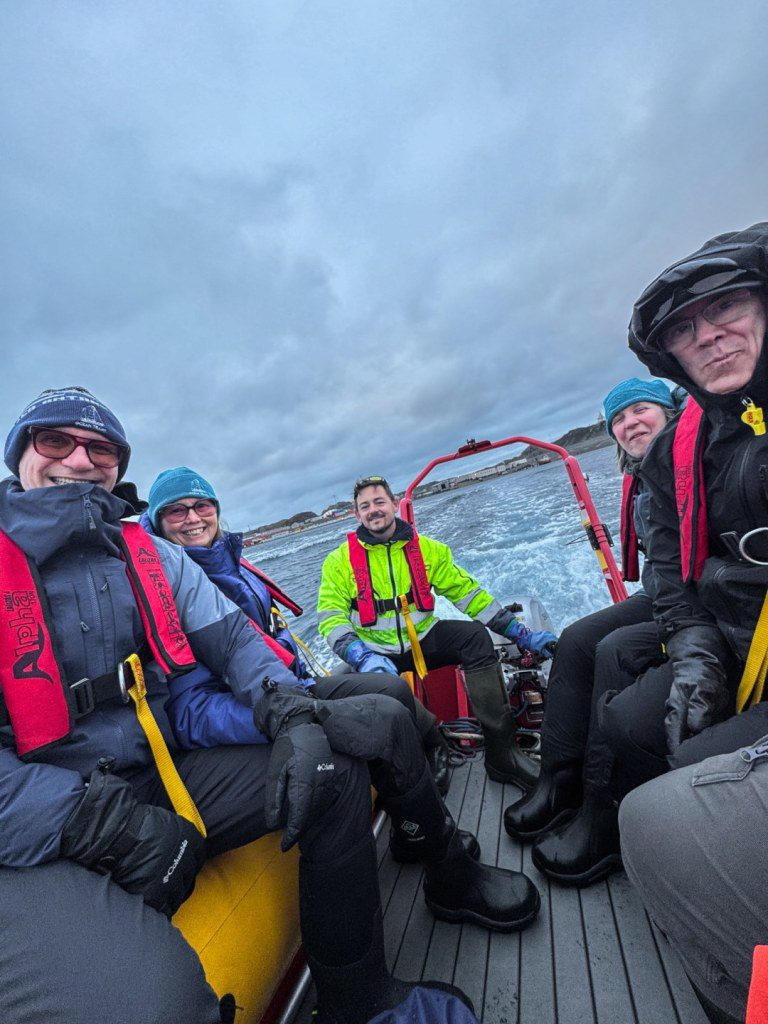
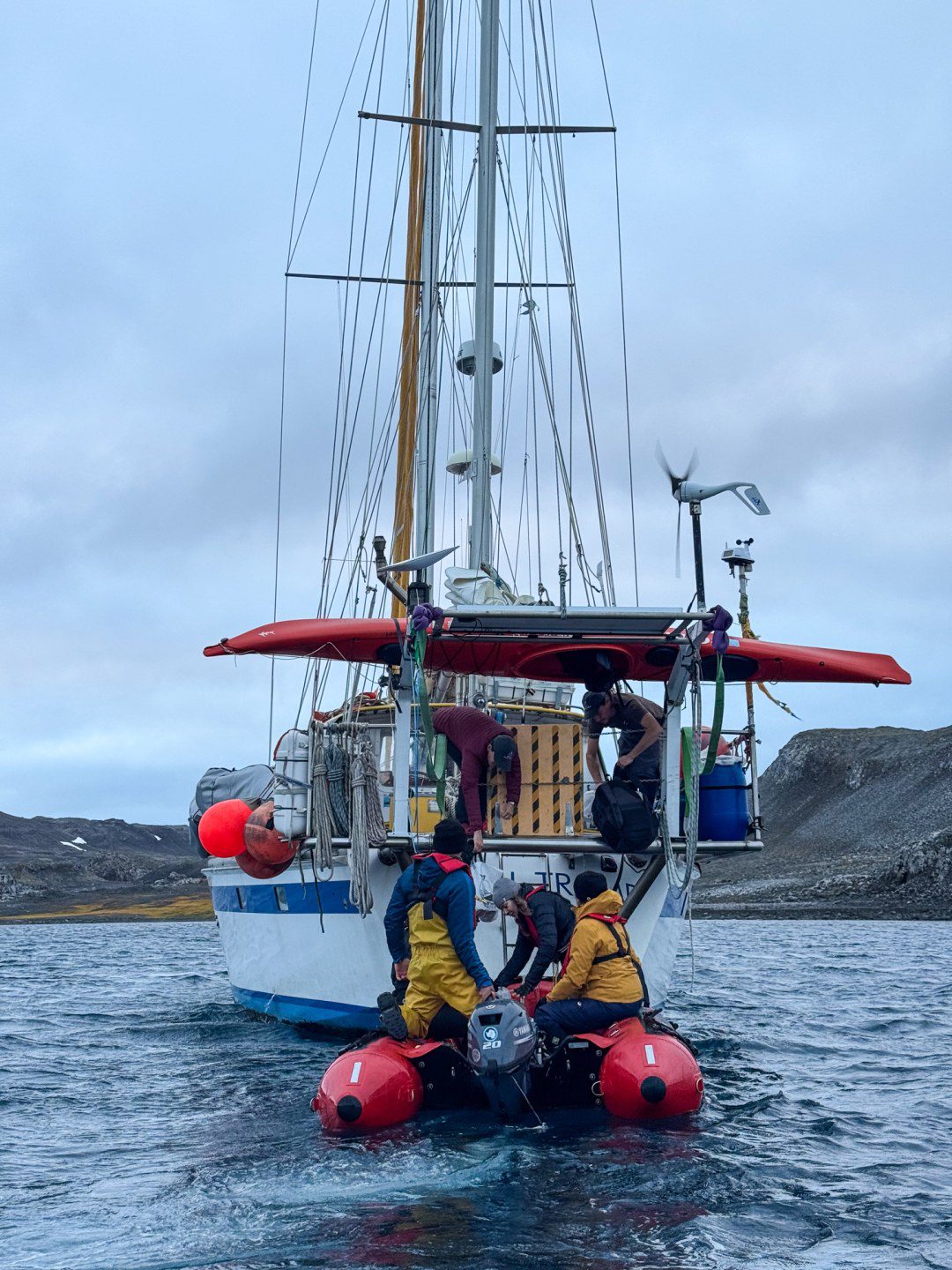
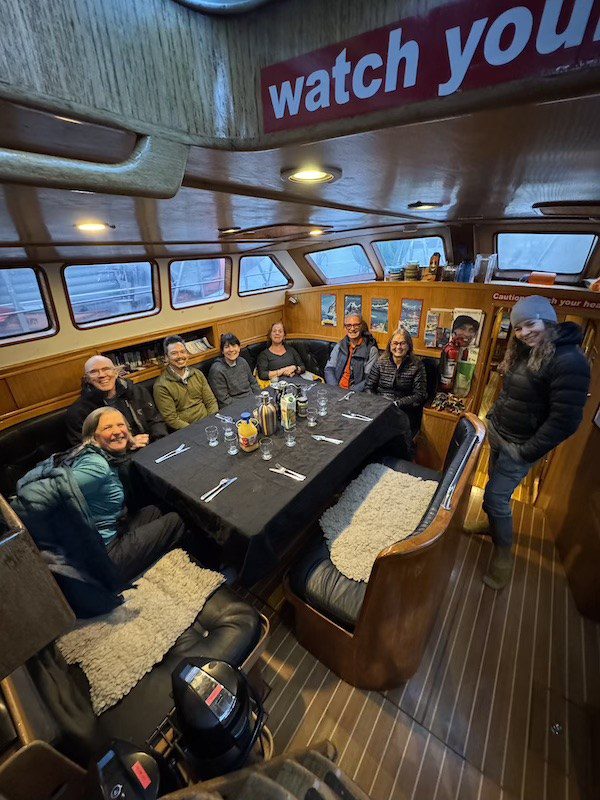
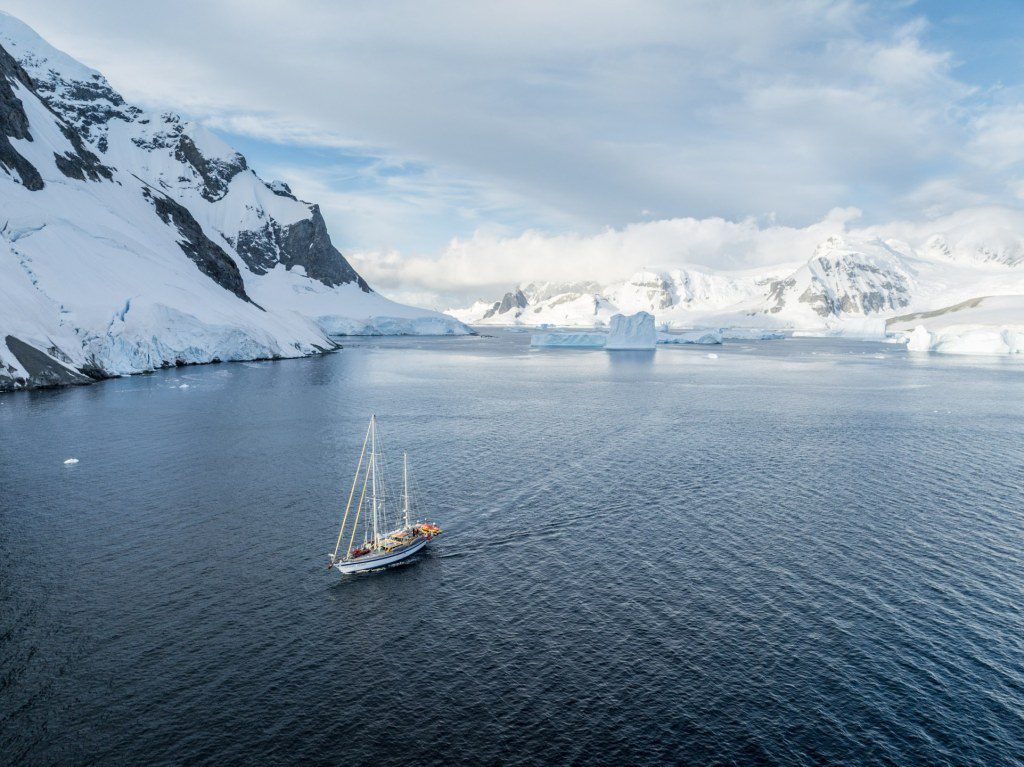
From the airstrip, we transferred to Villa Las Estrellas before boarding a zodiac that carried us across icy waters to our floating basecamp, Ocean Tramp, a 66-foot ketch-rigged expedition sailboat built for remote polar travel.
That first evening, we settled into life aboard, anchored just offshore near a Chinese research station. We claimed our cabins, reorganized our gear, and the rhythm of expedition living began to take shape.
Day 4 – Triangle Point, Gentoo Penguins & Crossing the Bransfield Strait
By morning, we were underway from King George Island, sailing south through the South Shetland Islands toward Triangle Point in Yankee Harbor.
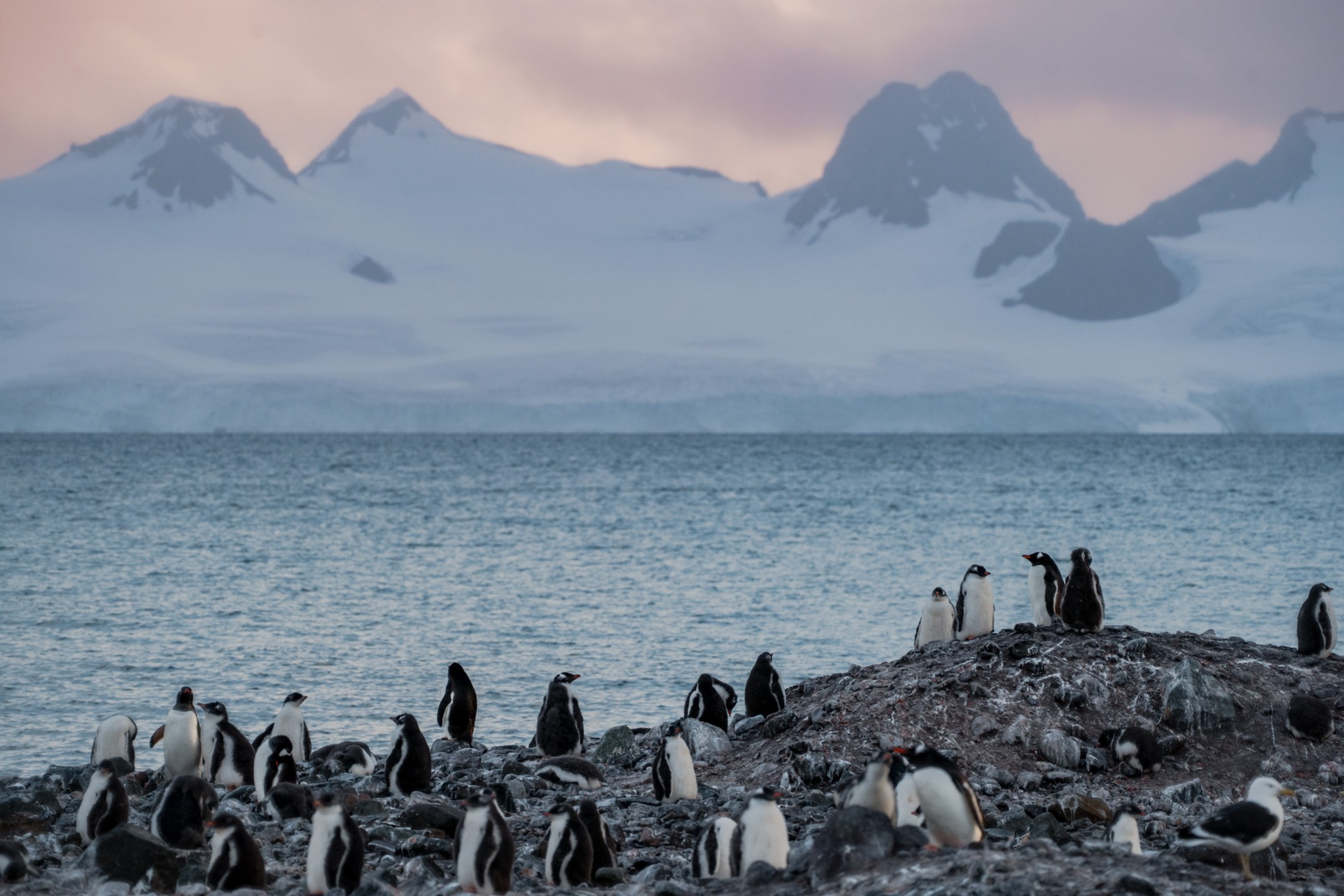
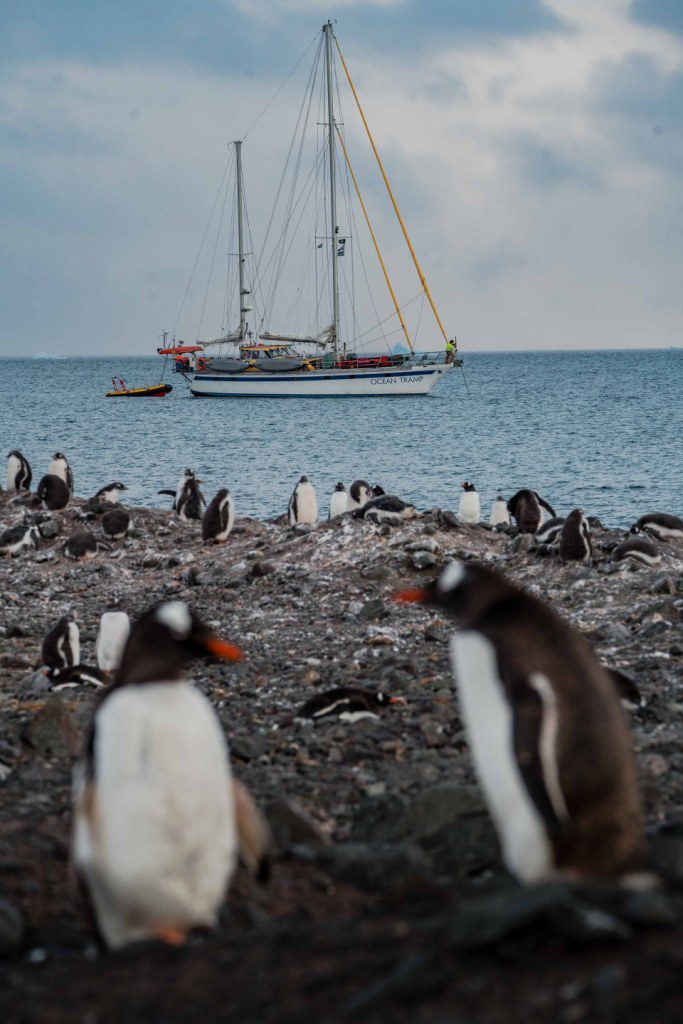
Wind tore across the landscape as we made our approach, the coastline rugged and exposed beneath low lying clouds. It was here we met our first true Antarctic residents – a lively colony of gentoo penguins!
Watching penguins is pure entertainment. Some marched in single file, others craning their heads skyward to call out to their mates, pairs bowing and posturing in animated conversations that seem oddly human. Some waddled past us with complete indifference to our presence, while others stopped to inspect their new visitors with occasional sideways glances.
Eventually, we returned to Ocean Tramp and settled in for dinner as the light began to soften.
That evening, we set sail across the Bransfield Strait toward the Antarctic Peninsula.
Day 5 – The Bransfield Strait Crossing & Arrival at the Antarctic Peninsula
Day five unfolded entirely at sea.
After raising anchor the previous evening, Ocean Tramp pressed south across the Bransfield Strait toward the Antarctic Peninsula, a roughly 100-nautical-mile (185 km) stretch of exposed Southern Ocean that took nearly twenty hours to cross.
The Southern Ocean was no gentle transit corridor. Swell rolled beneath the hull of Ocean Tramp as wind built through the morning, and for much of the day, most of us stayed in our cabins as the crossing wore on. Even seasoned travelers felt the weight of the motion. This is part of true Antarctica adventure travel, you don’t get to skip the ocean that guards the continent!
The hours passed slowly, marked by the steady movement of the sailboat pushing through open water.
By evening, the jagged outline of the Antarctic Peninsula appeared on the horizon. After nearly twenty hours at sea, we finally entered calmer waters and anchored at Chutney Cove, and for the first time since leaving the South Shetlands, we were officially on the Peninsula.
Day 6 – Kayaking Graham Passage & a Toast to Antarctica
Day six marked our first full immersion into what this small group Antarctica expedition was truly about – moving across the land and sea under our own power.
We slipped quietly into our kayaks and paddled into Graham Passage, the water shifting gently beneath us as steep cliffs rose on either side like frozen cathedral walls. Ice drifted past us in sculpted fragments. It felt so good to get moving after a few days of extended travel!
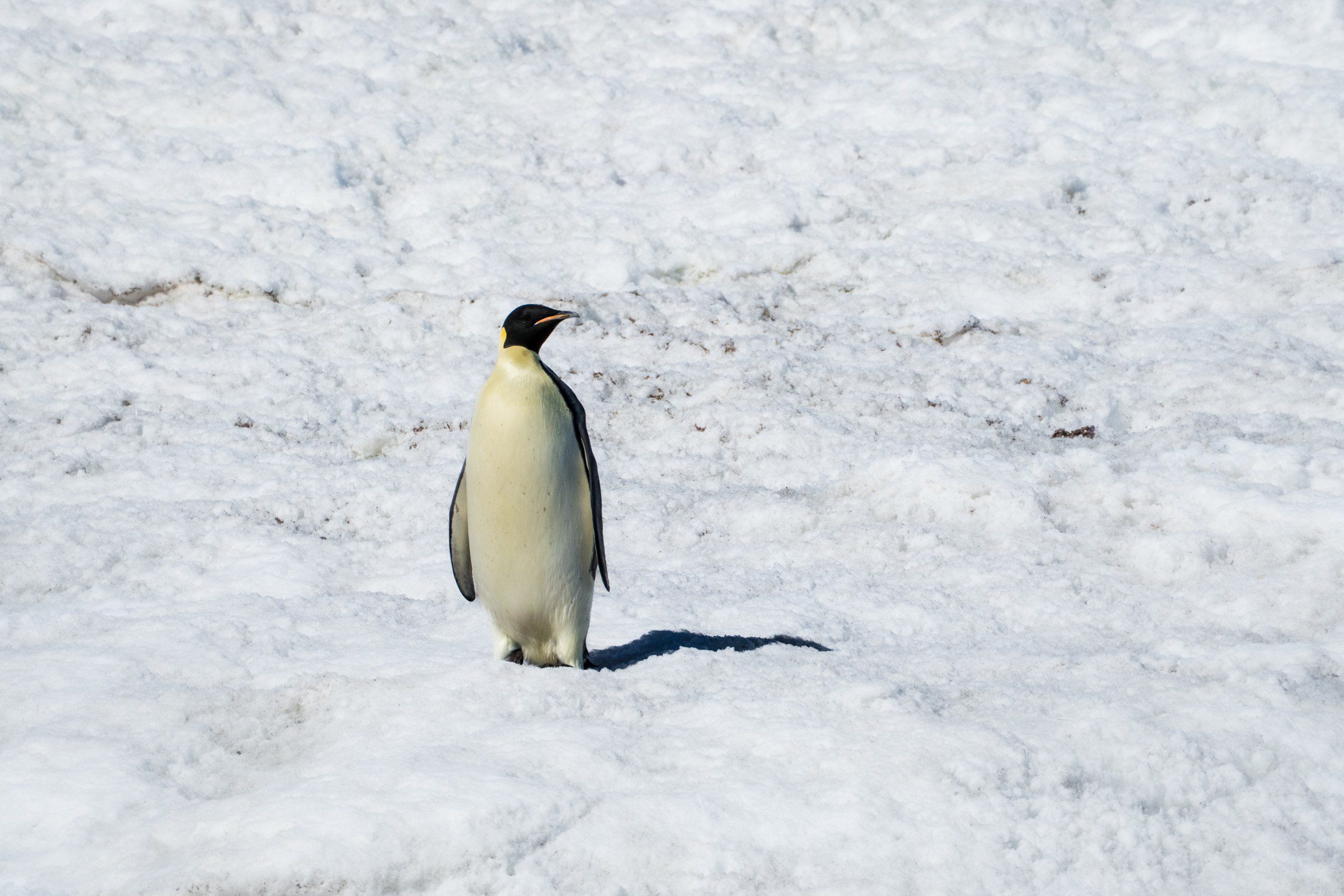
Then came an unexpected sighting… High on a snowy slope above the shoreline stood a lone Emperor penguin. Emperor penguins are not common along the Antarctic Peninsula, they are typically found farther south on the Antarctic continent itself, particularly in the colder and more stable coastal regions like the Ross Sea, Weddell Sea, and East Antarctica.
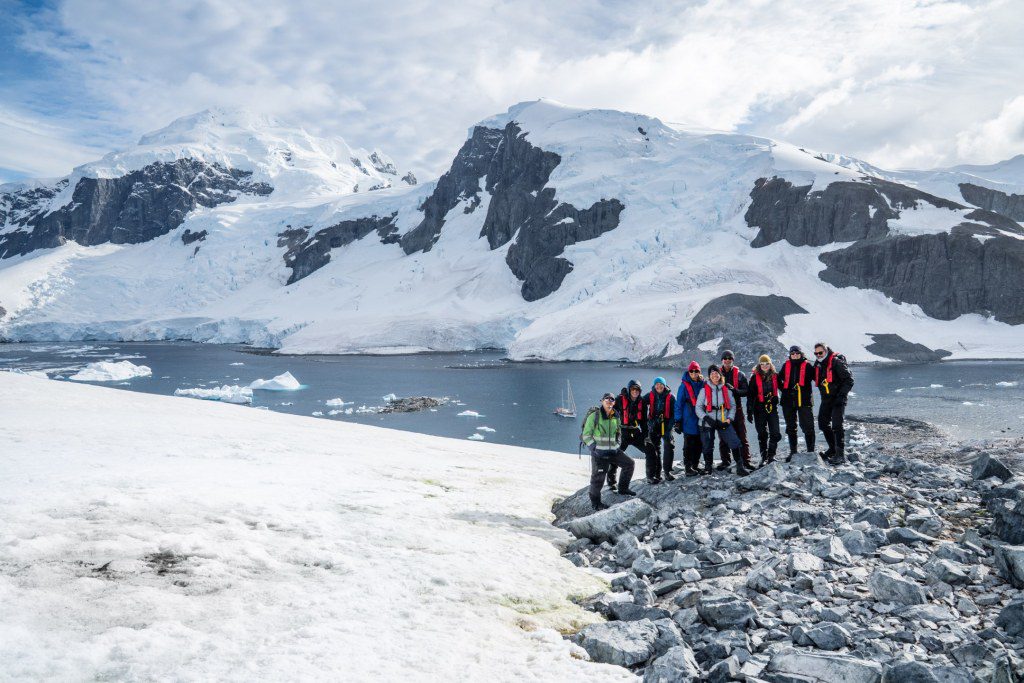
Later that day we made landfall in Meusnier for a short hike. Our boots crunched across snow and rock as we climbed above the shoreline for a better perspective of our surroundings. From above, the Antarctic Peninsula stretched outward in jagged ridgelines and hanging glaciers, and our expedition sailboat below looked impossibly small, a lone vessel anchored in a landscape that felt entirely untouched.
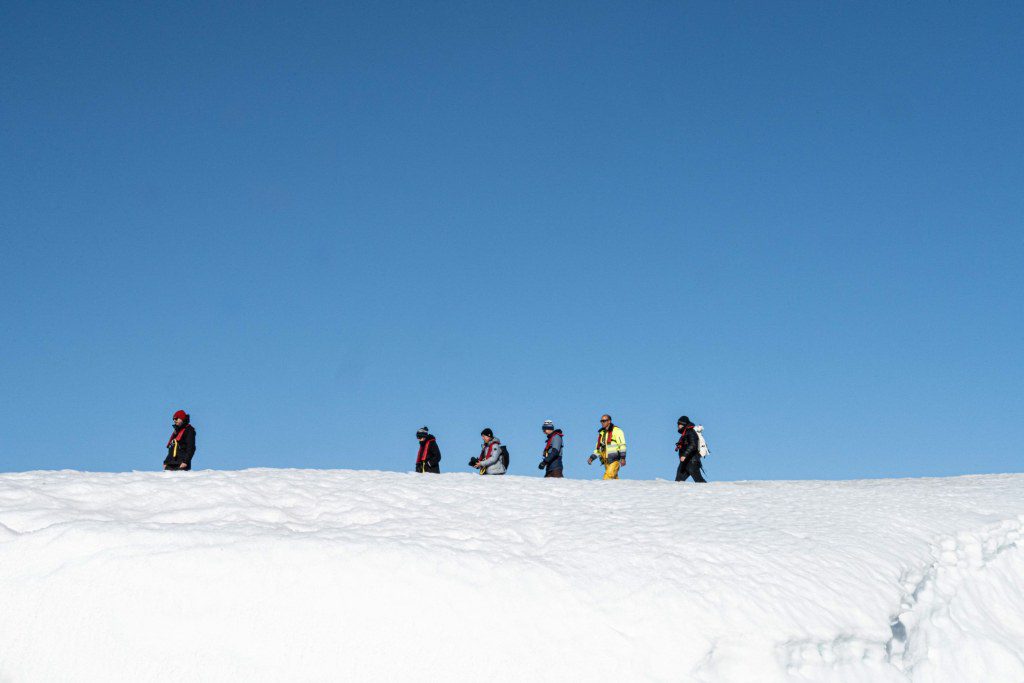
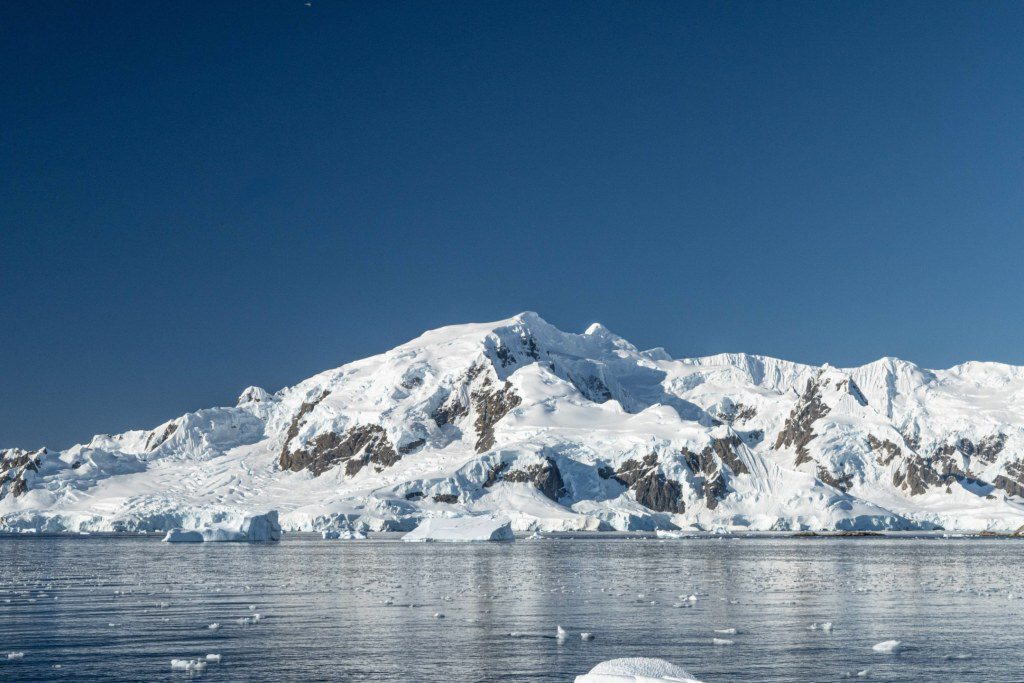
We paused on the rocks and raised a toast to acknowledge that we were standing on the Antarctic continent at last.
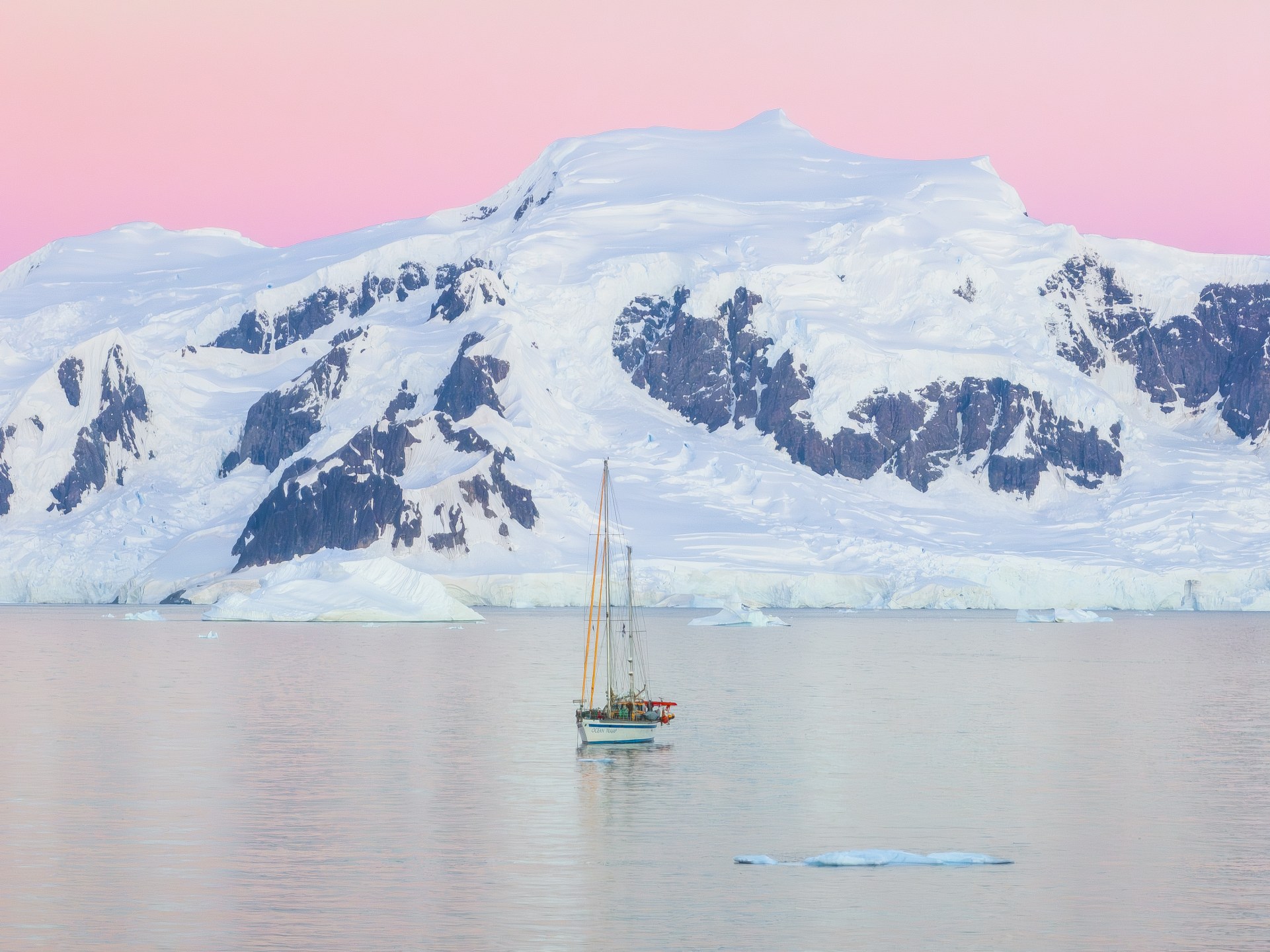
By evening, we were anchored at Portal Point. As the sun began to set, the sky softened with streaks of pink and gold spilling across the horizon. In that fading glow, some humpback whales began to surface nearby, giving us one of the most epic send offs into the night.
Day 7 – Whales, Peaks & Paradise Bay
We set our course for Wilhelmina Bay – often nicknamed “Whale-helmina” for the high number of humpback whales that gather here to feed. The bay was calm and the water was alive with possibility.
But Antarctica never promised us a spectacle.
Whale sightings were sparse that morning, a reminder that even in nutrient-rich feeding grounds, wildlife sightings are never guaranteed. You don’t arrive expecting a performance, you show up prepared to witness whatever unfolds.
From Wilhelmina Bay we continued south to Cuverville Island, home to one of the largest gentoo penguin colonies on the Antarctic Peninsula. Hiking upward from the shoreline, we stepped carefully as thousands of birds commuted between sea and nest.
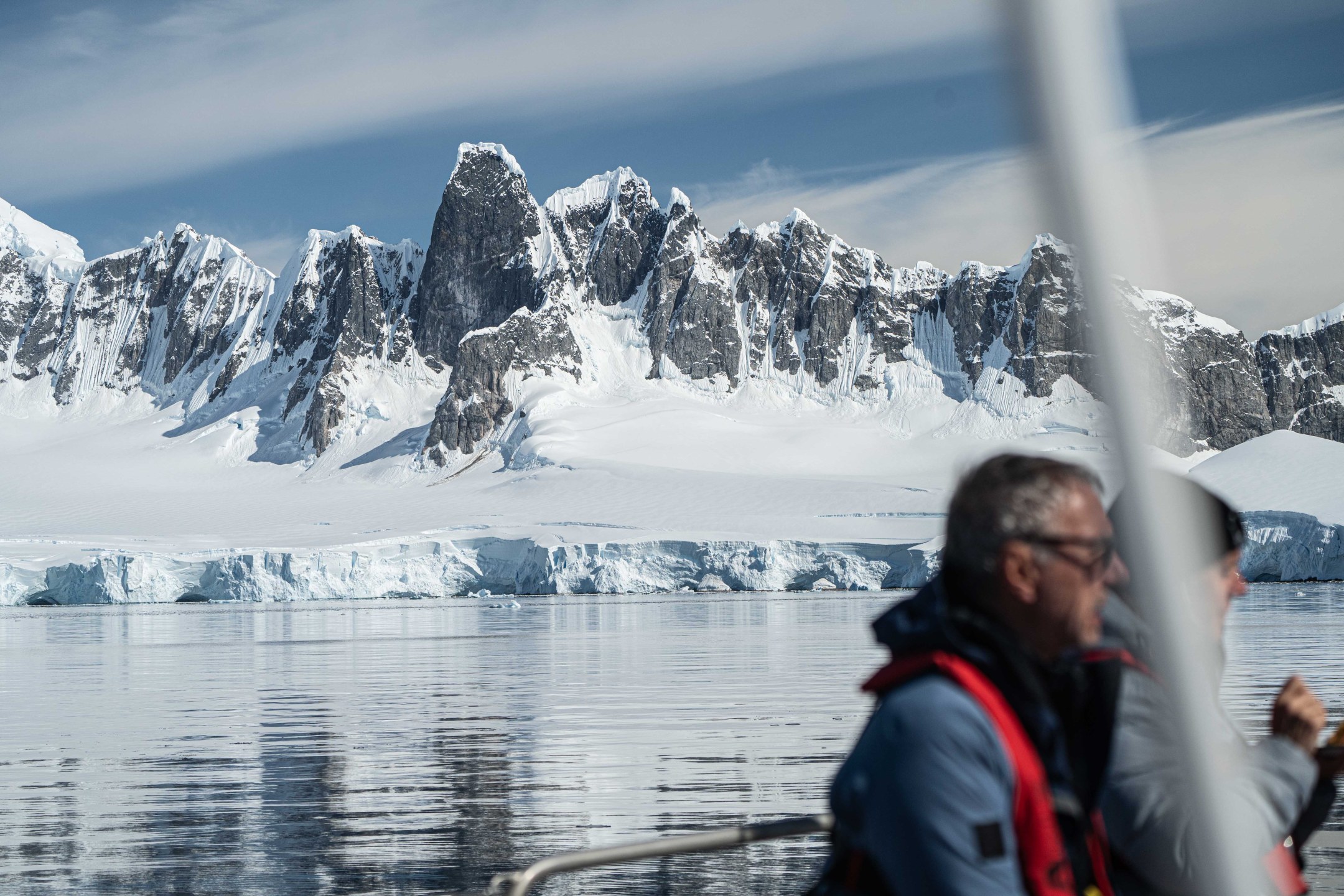
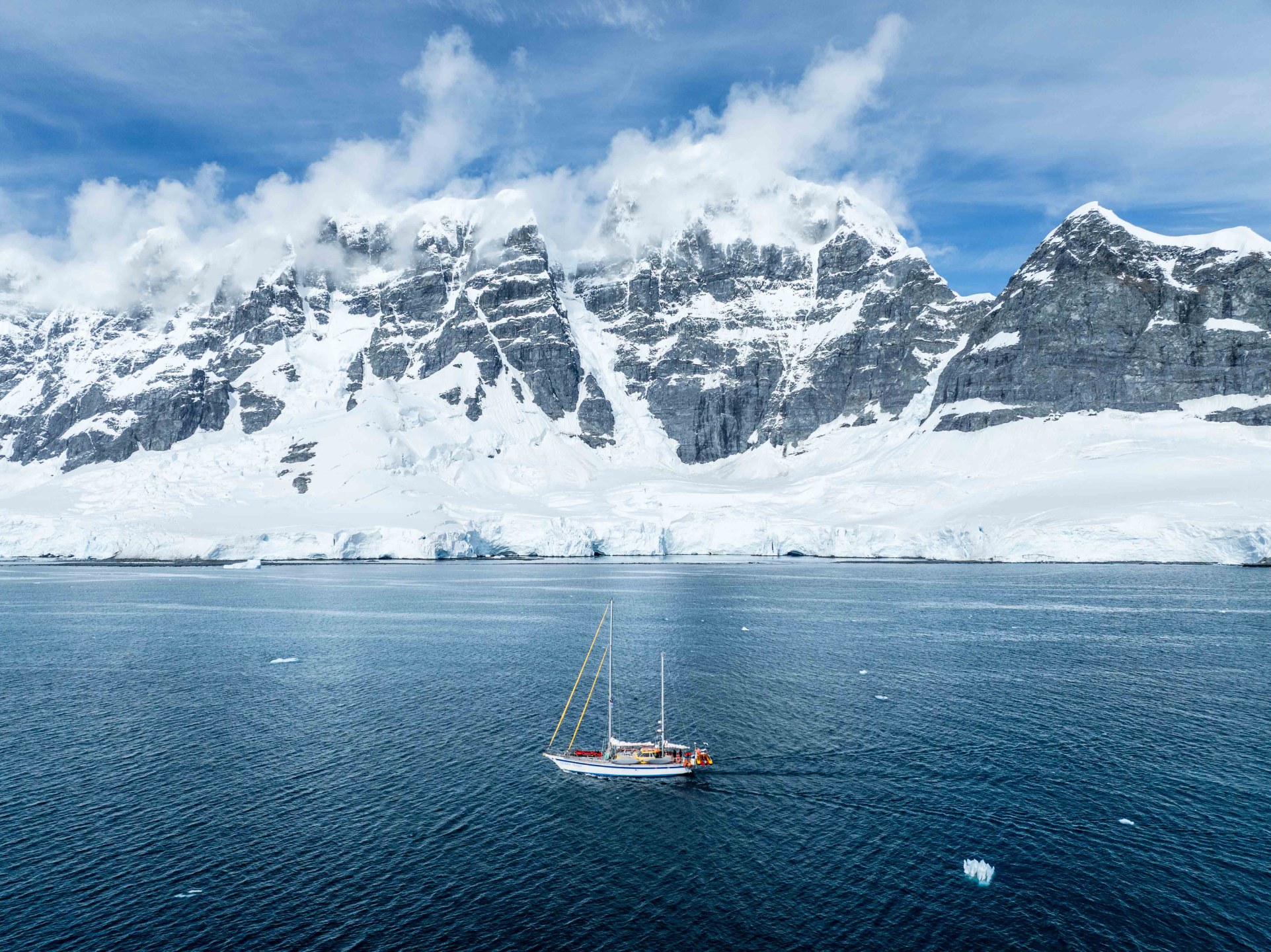
From here, we sailed through the narrow Aurora Channel toward Andvord Bay, the landscape tightening around us in the most dramatic way. Sheer mountains dropped straight into the sea, hanging glaciers spilled downward in fractured blues and whites, while icebergs drifted silently by.
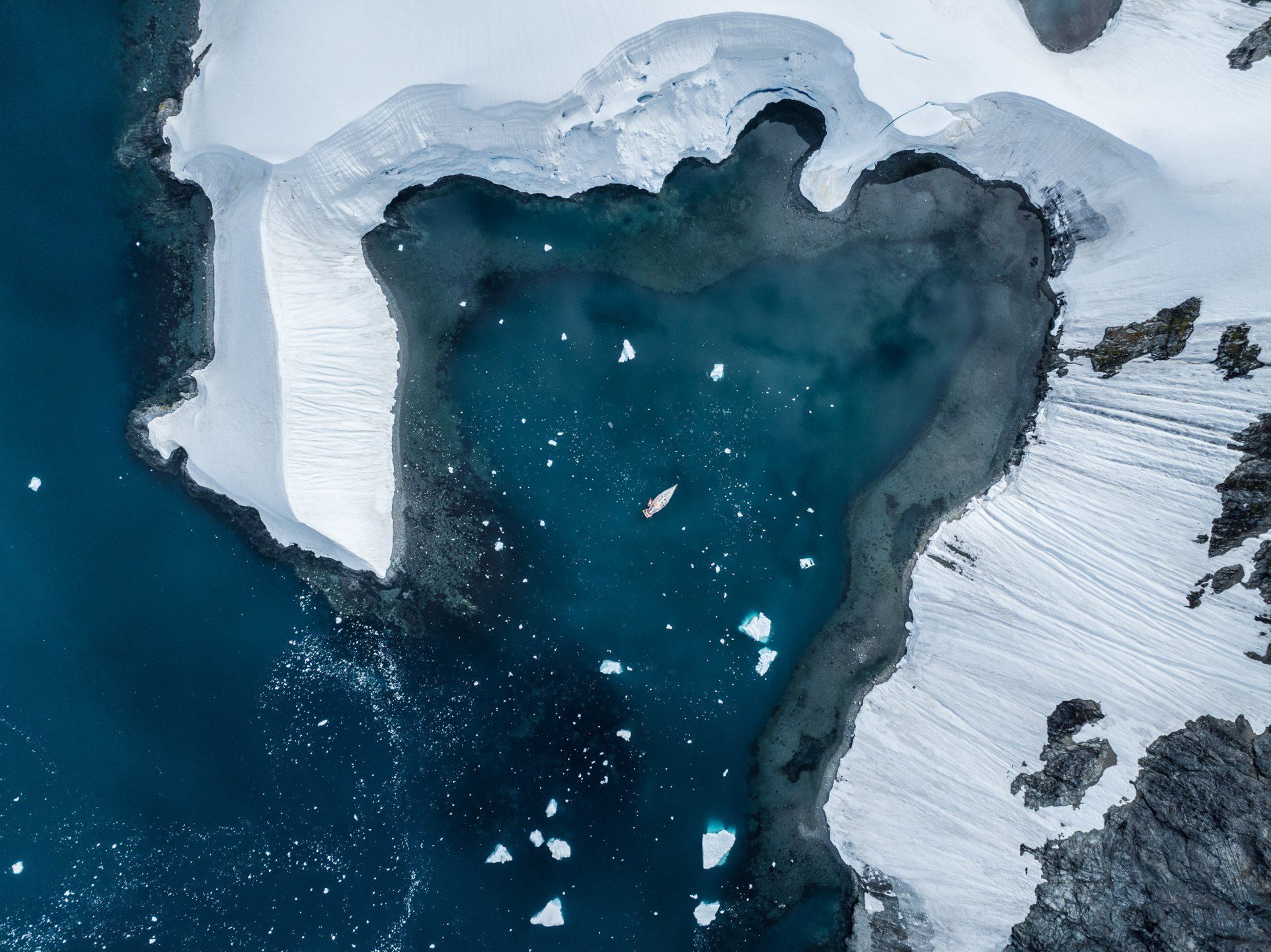
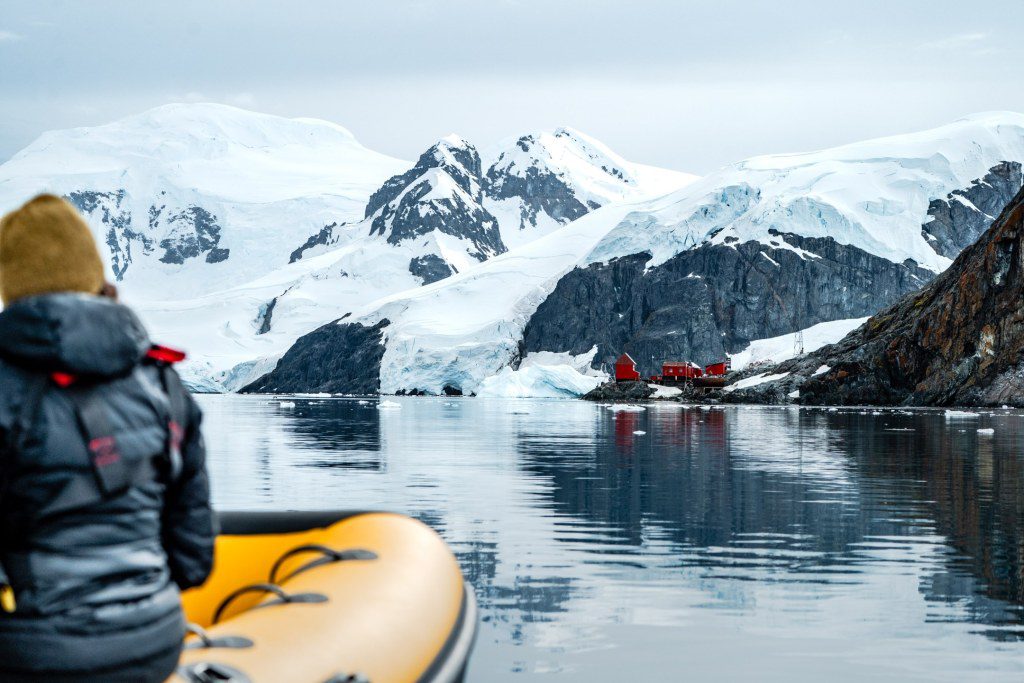
By evening, we were anchored in a place called Paradise Bay, tucked beneath towering peaks near Argentina’s Brown Base. The name was very fitting for this place. When the wind finally drops and the water turns to glass, the whole bay turns into a perfect mirror, reflecting the nearby mountains across the surface so clearly, it is difficult to tell where rock ends and sky begins.
At the southernmost point of our expedition, surrounded by ice and stillness, came the quiet realization that we were very, very far from home.
Day 8 – Exploring Paradise Bay by Zodiac & Kayak
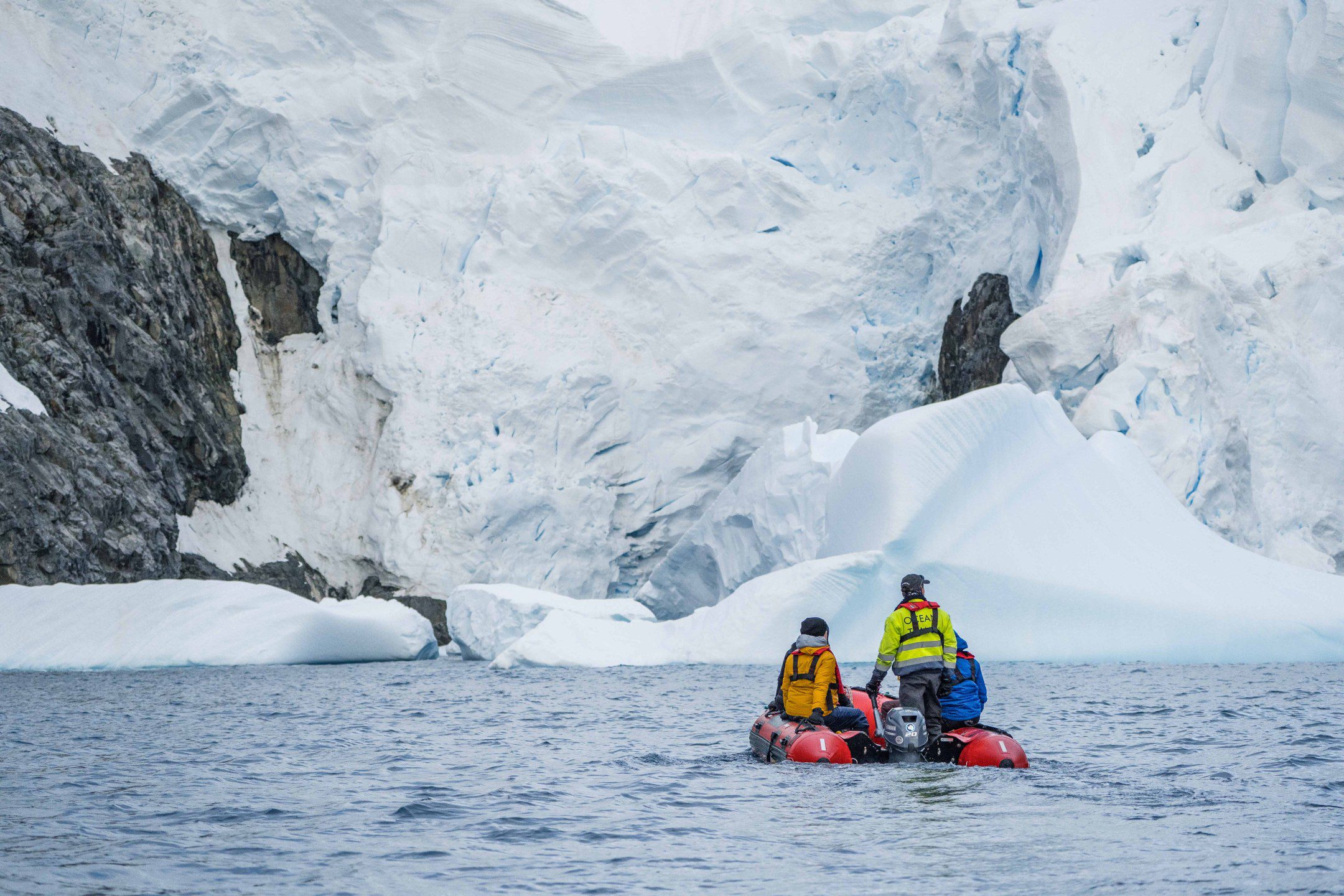
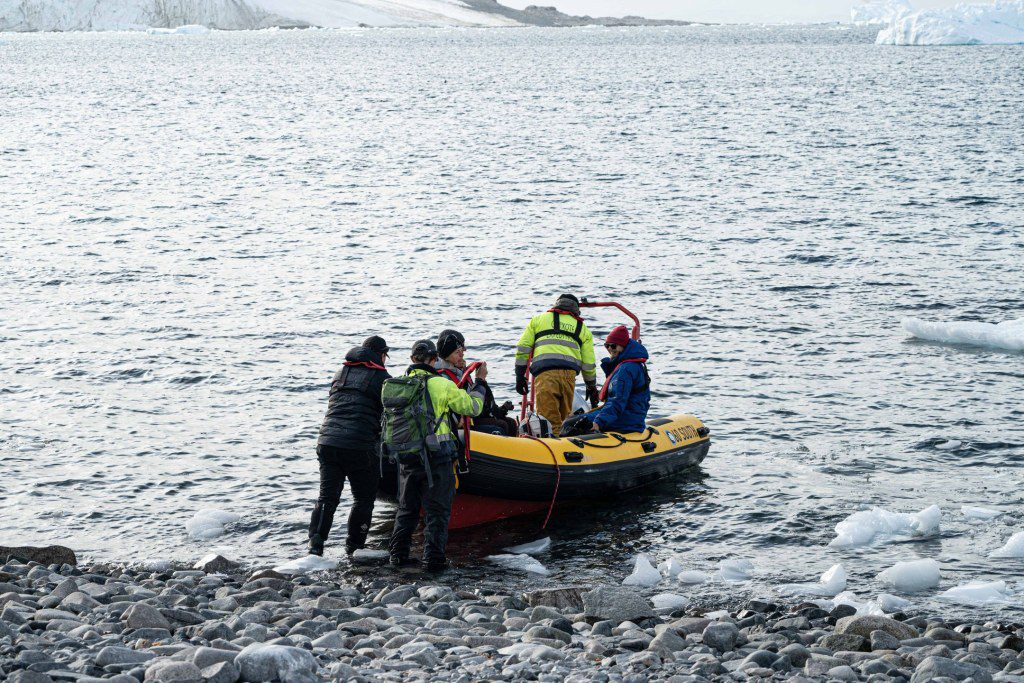
The next morning we set out by zodiac around 10am to explore the shoreline near Brown Base, scanning the cliffs and rocky outcrops for movement. It didn’t take long before we spotted blue-eyed shags perched along the rock faces, their striking turquoise eyes catching the light as they watched us drift past. We went ashore briefly to observe seals resting near the waterline before returning to the zodiacs to scan the fjord for whales.
Back aboard, lunch was served, followed by some down time for guests to nap enjoy a quiet pause to the day on deck.
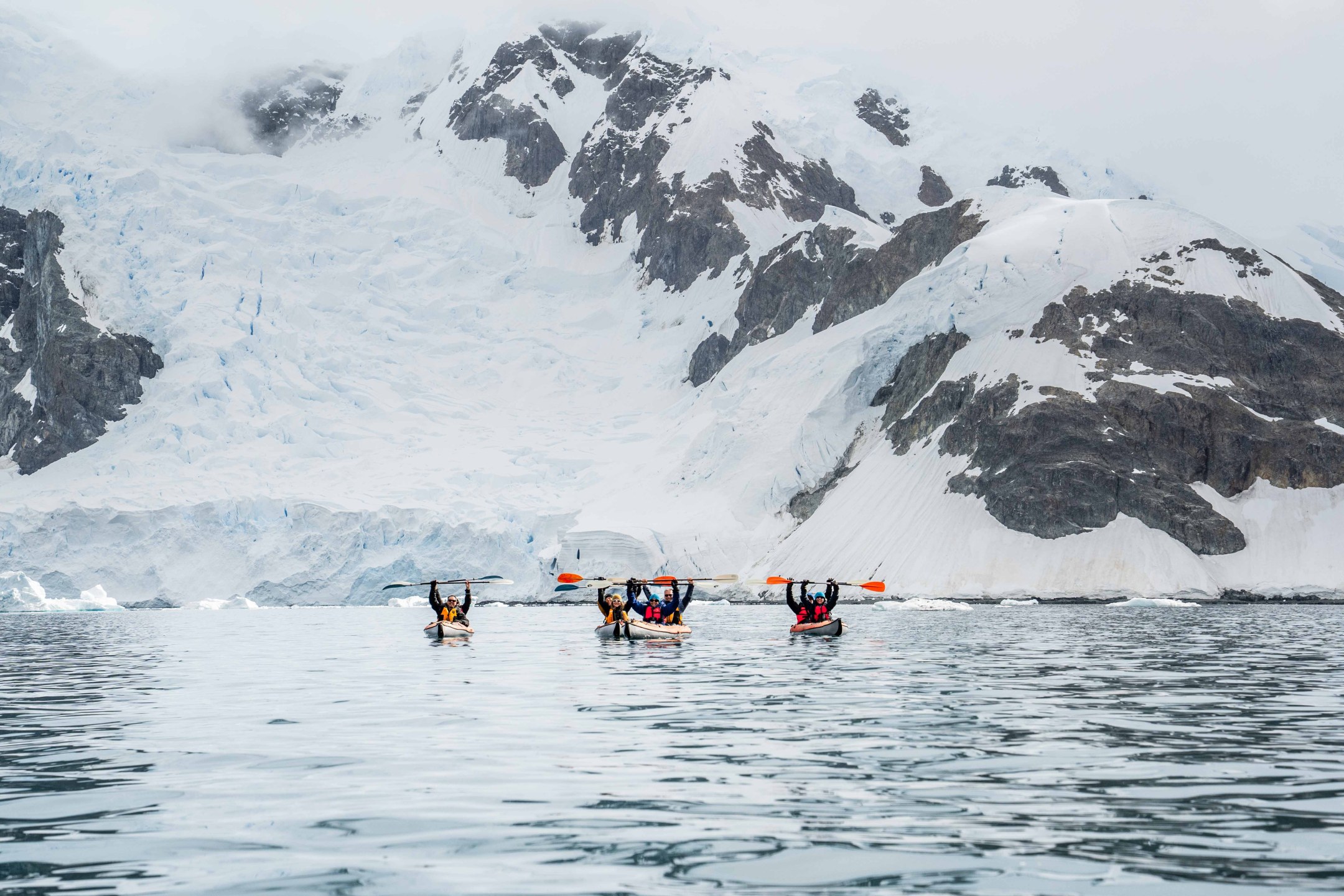
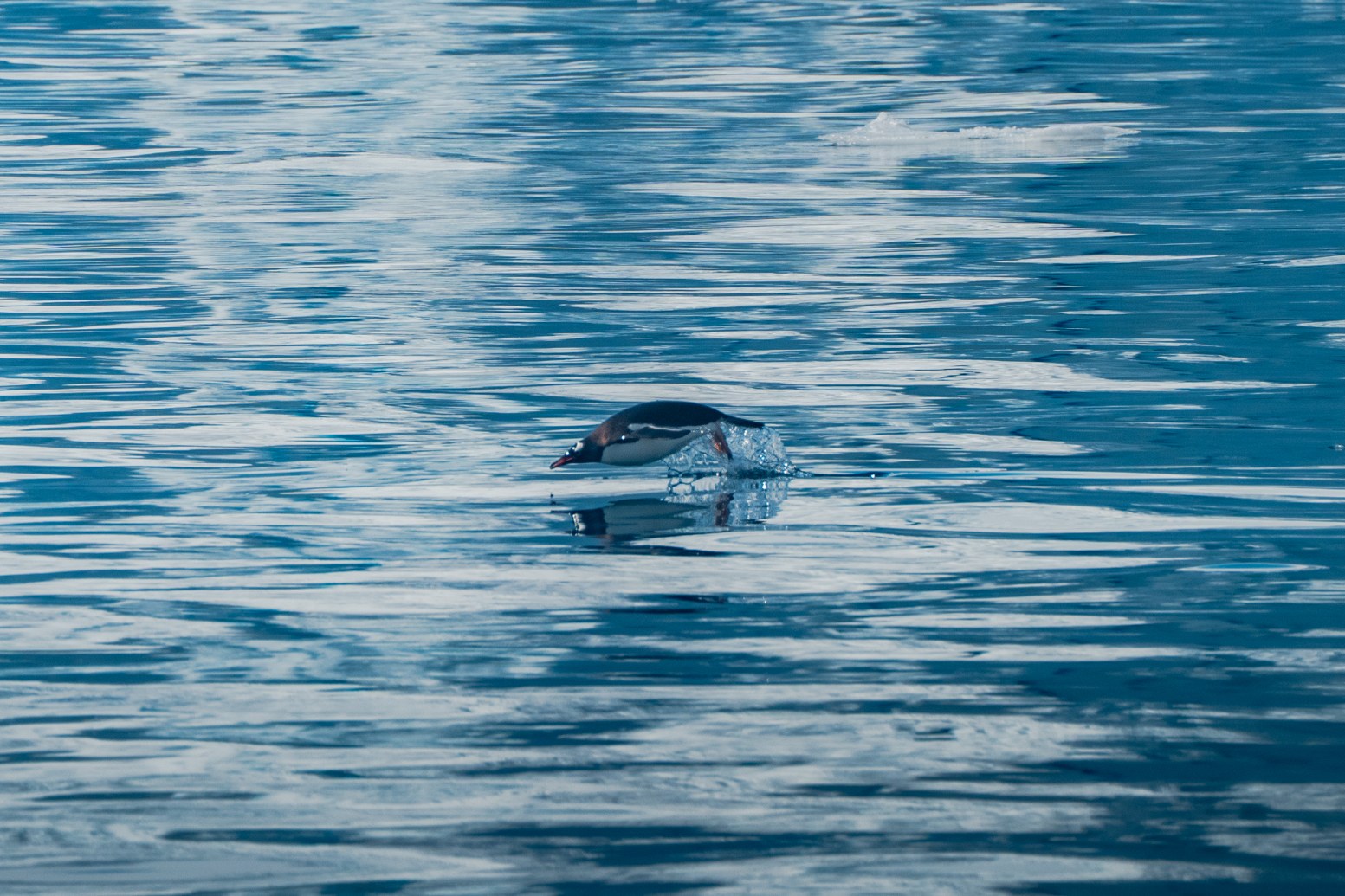
In the afternoon, we enjoyed a 2-hour paddle and headed deeper into Paradise Bay. Gentoo penguins torpedoed through the water around us, darting beneath our kayaks with astonishing speed, while towering ice cliffs glowed overhead. Every direction offered something to watch or listen for.
As the day drew to a close, the group gathered for another evening of good food and shared stories aboard Ocean Tramp.
Day 9 – Port Lockroy: History at the End of the Earth
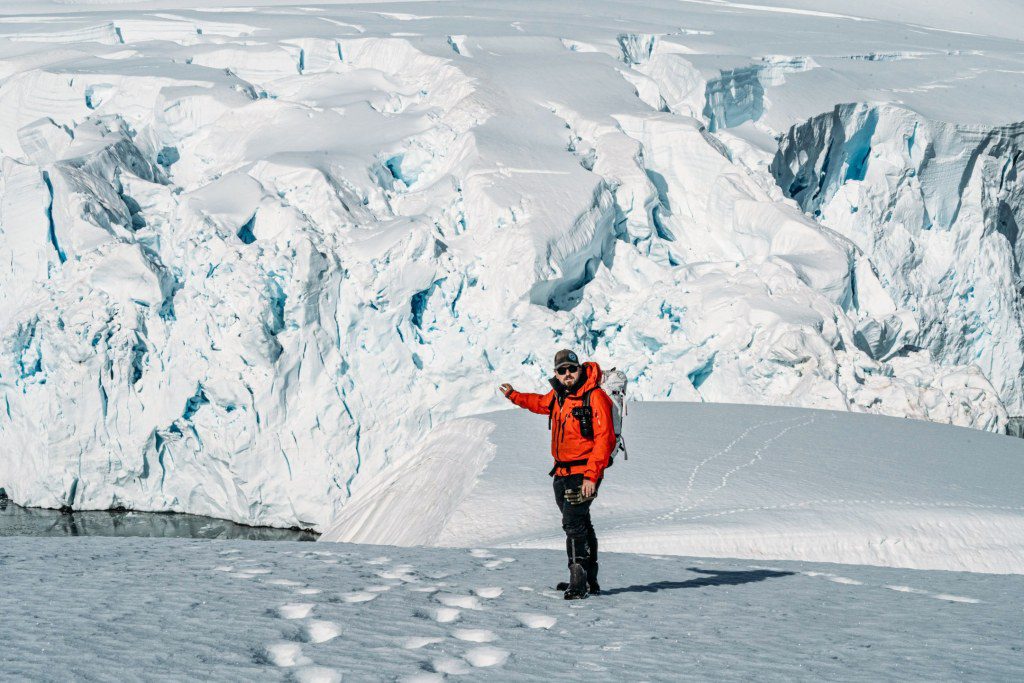
The morning began with a short relocation within Paradise Bay before we went ashore for a hike toward the face of a glacier. Standing close enough to hear the faint cracks and pops of shifting ice, the scale of the Peninsula felt immediate and alive.
Before returning to the boat, some of us opted for a polar plunge that shocked every nerve awake.
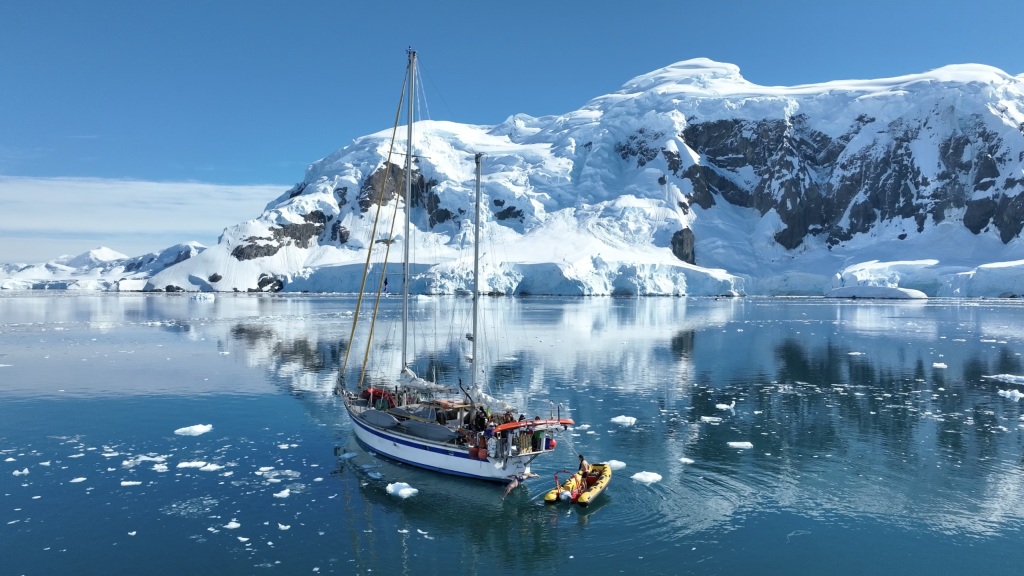
Later that day, as we moved through the Gerlache Strait, the ocean suddenly came alive as a pod of orcas appeared, circling and gliding near the sailboat with effortless precision.
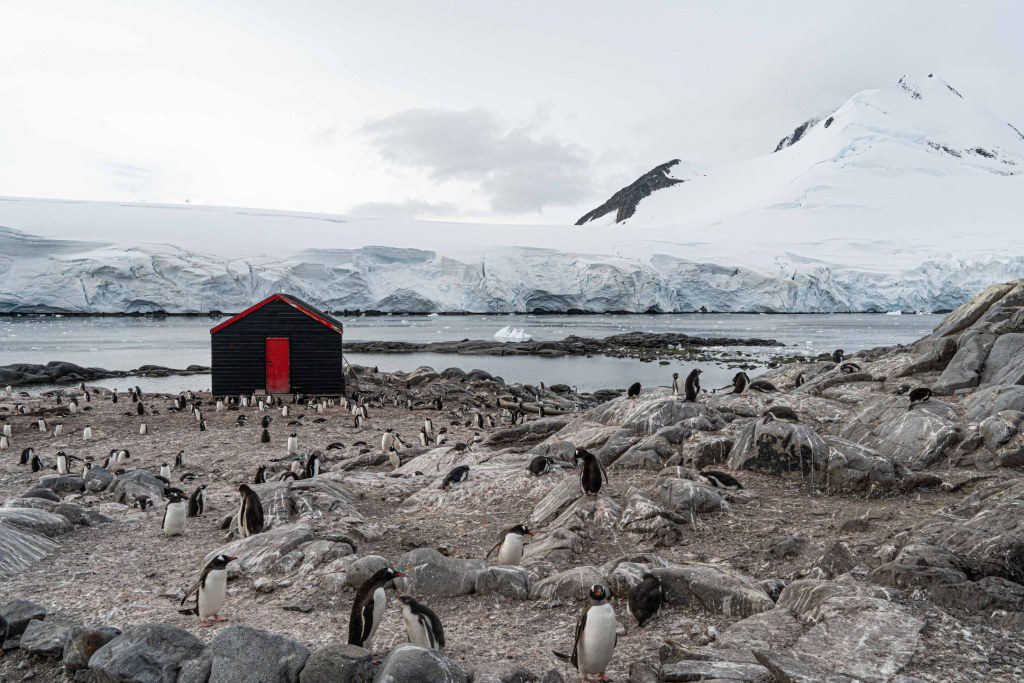
Sailing past the dramatic “Seven Sisters” peaks, we arrived at Port Lockroy on Goudier Island, home to a historic British base established in 1944. We stepped ashore to explore the preserved buildings of Base A, where early Antarctic research and wartime presence once took hold. Just beyond the structures, gentoo penguins dotted the hillside and shoreline around Port Lockroy, continuing their daily routines, largely indifferent to the quiet visitors passing through.
We mailed postcards from the famous Penguin Post Office, one of the most remote postal stations on Earth, before we returned to the boat.
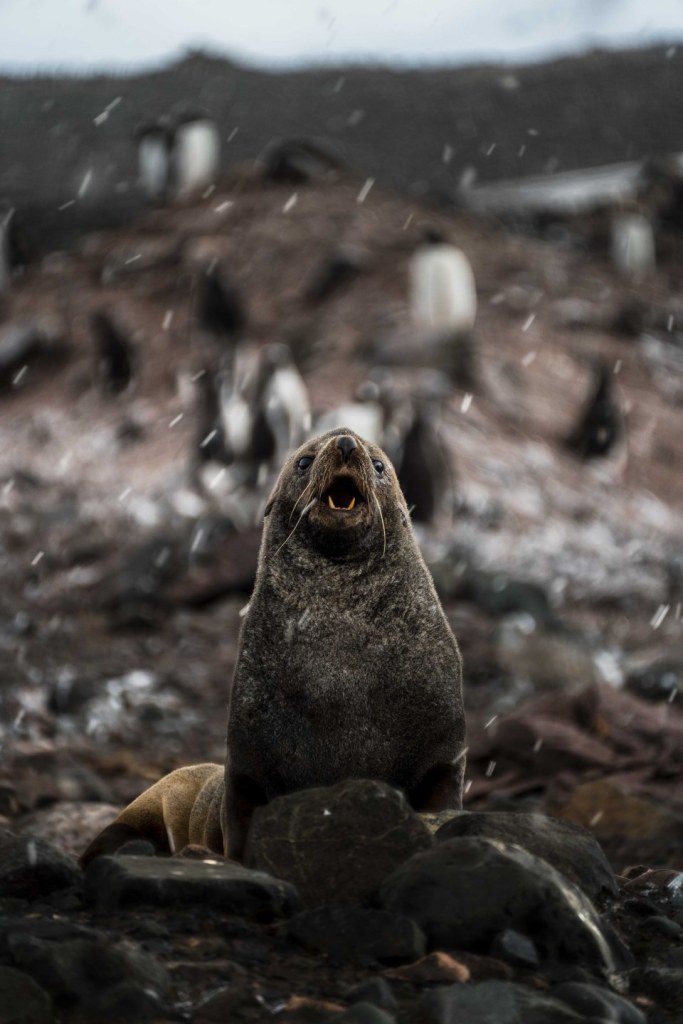
On the way back to Ocean Tramp, we took a detour to observe a leopard seal stretched across the ice, resting in the snow. A minke whale surfaced briefly nearby before slipping beneath the surface again.
That evening, anchored near Port Lockroy as winds began to build, the day felt layered in a way only Antarctica can deliver.
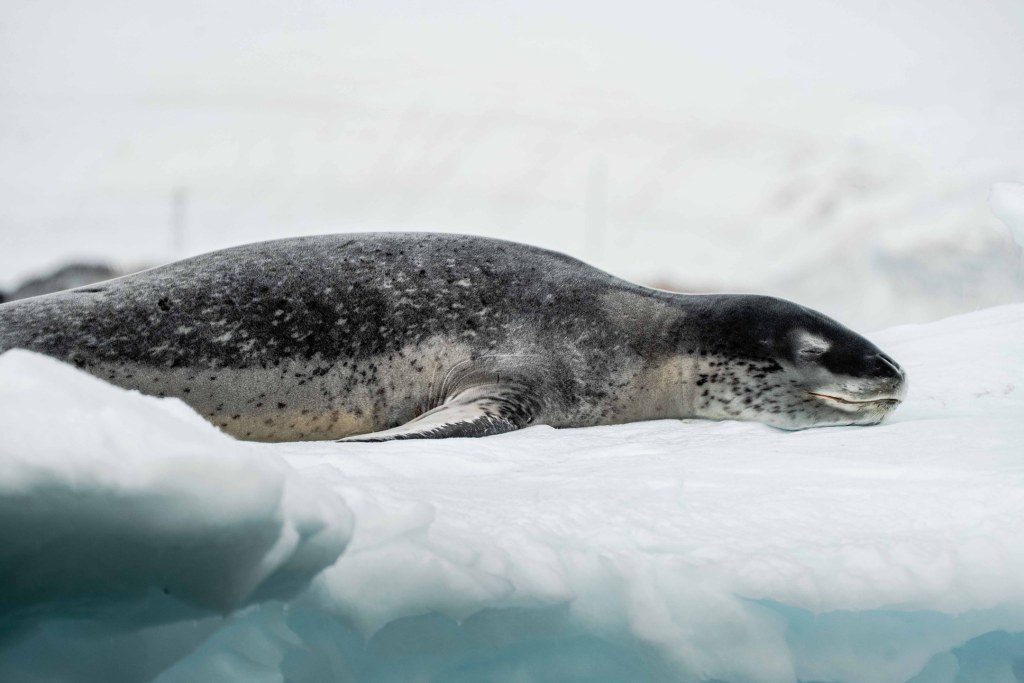
Wildlife encounters like these are exactly why small group Antarctica expeditions are so powerful. Fewer people means less noise, less disturbance, and the freedom to let moments unfold naturally.
Day 10 – Chinstrap Penguin Colony & One Last Whale Show
We left Port Lockroy in the morning and began working our way back north toward Wilhelmina Bay.
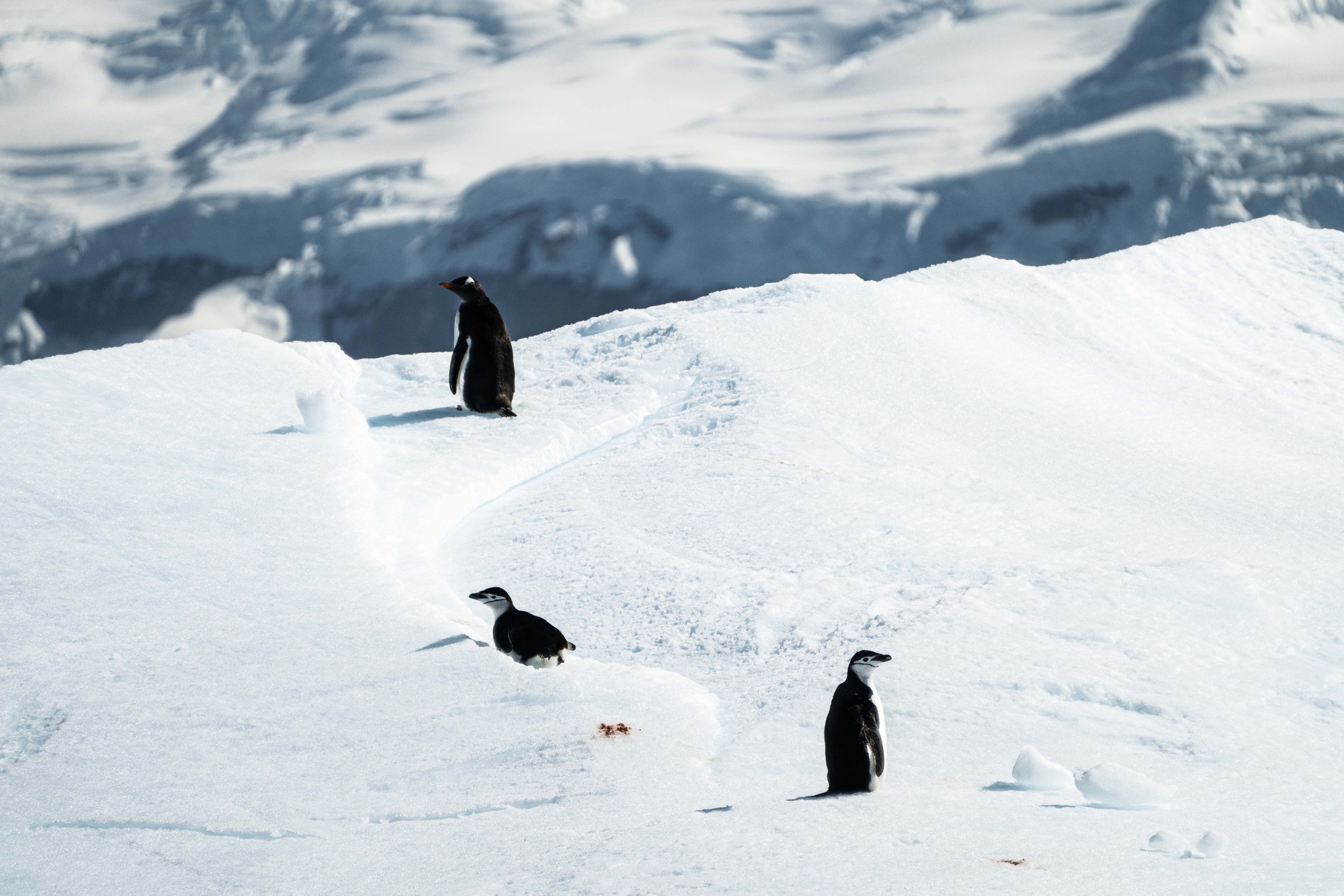
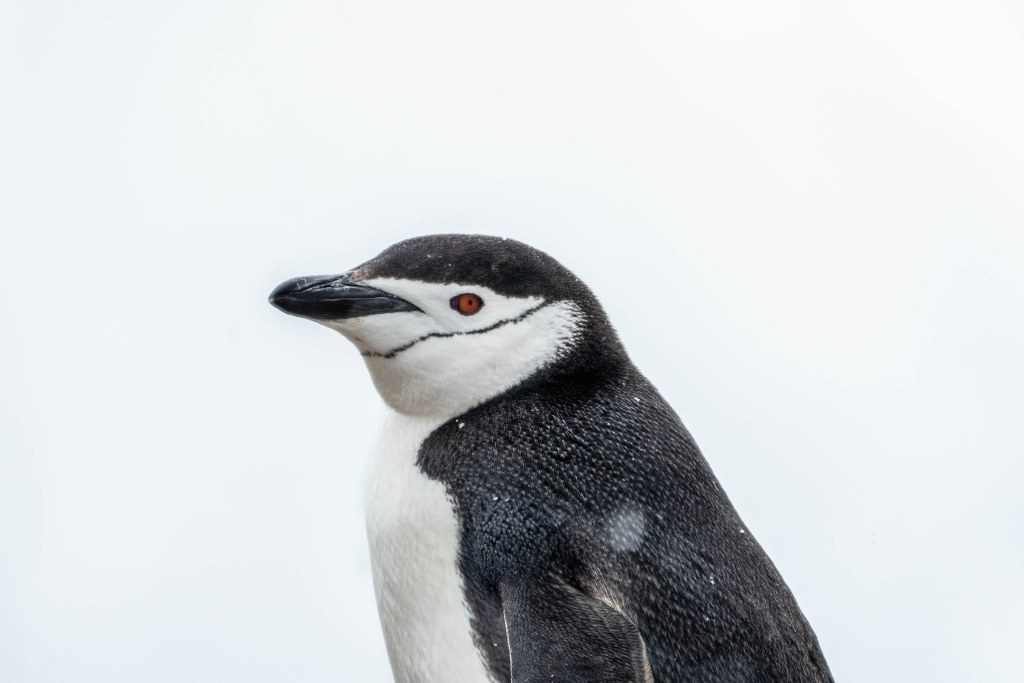
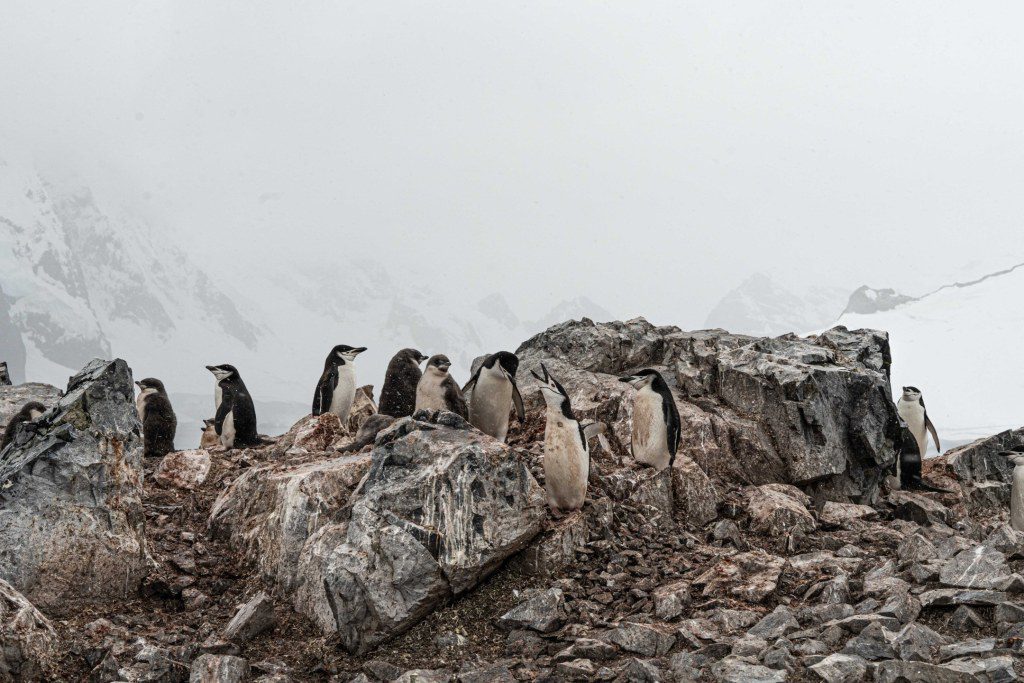
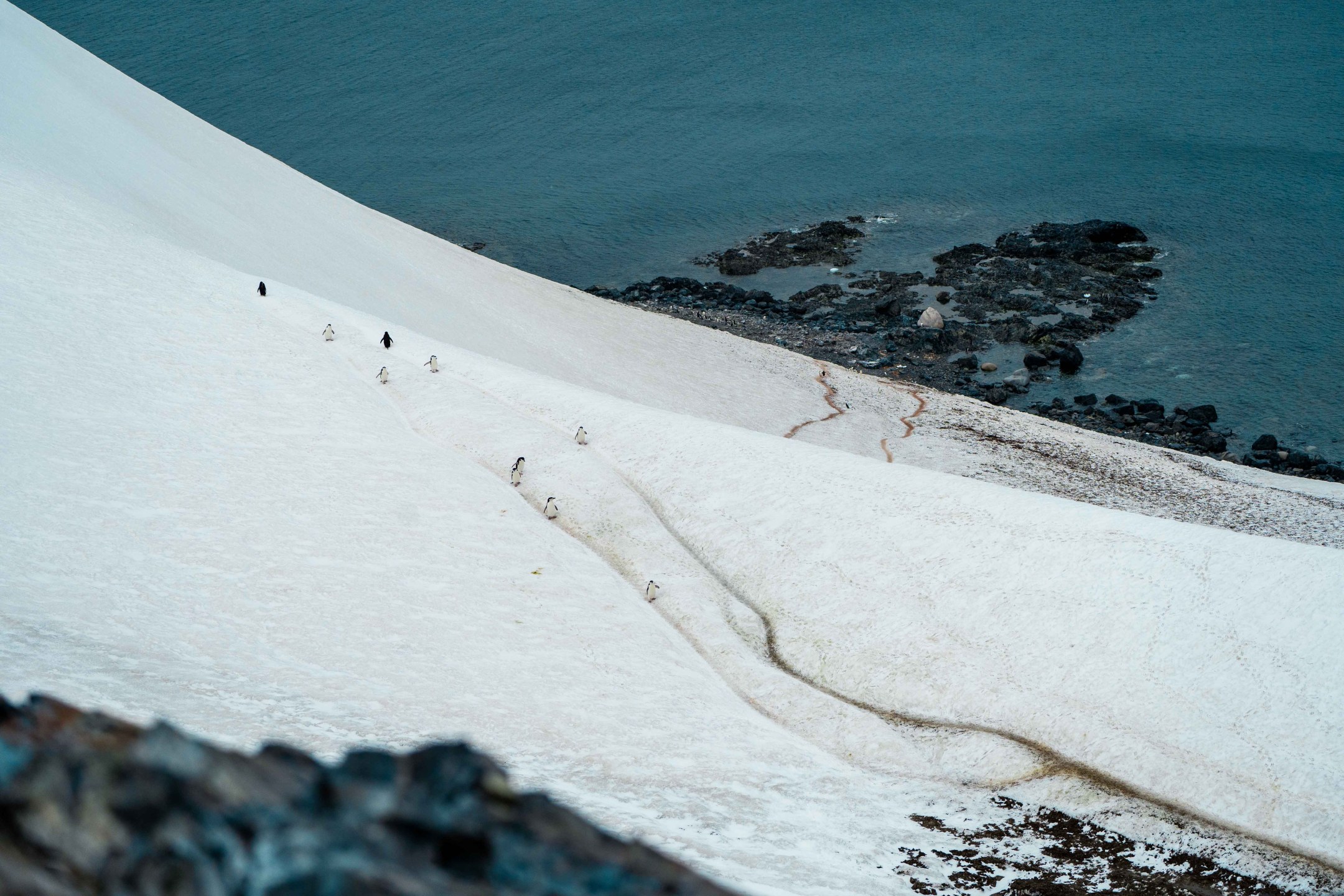
Before fully committing to the return transit, we made one final landing on the Antarctic Peninsula to hike up toward a colony of chinstrap penguins perched high on the cliffs above the bay. From above, we could see well-worn penguin highways threading through the snow below, connecting their colony to the sea.
And as if Antarctica hadn’t already delivered enough incredible wildlife encounters, the day closed with a humpback whale breaching repeatedly in a fjord nearby, rising, crashing, and rising again, each impact echoing across the water.
By evening, we raised anchor and turned north, beginning the long sail back toward King George Island.
Day 11 – Return Toward the South Shetlands & King George Island
We spent the full day sailing north across the Bransfield Strait toward King George Island.
The crossing took most of the day aboard Ocean Tramp, and was steady and uneventful compared to our southbound transit. By evening, we reached the South Shetland Islands, preparing for the final stage of the expedition.
Day 12-13 – Stormbound near King George Island
Shortly after our arrival at King George Island, the weather began to deteriorate quickly. Snow and strong winds swept across the South Shetland Islands, and for two full days we remained at anchor in front of Carlini Base, waiting for conditions to improve.
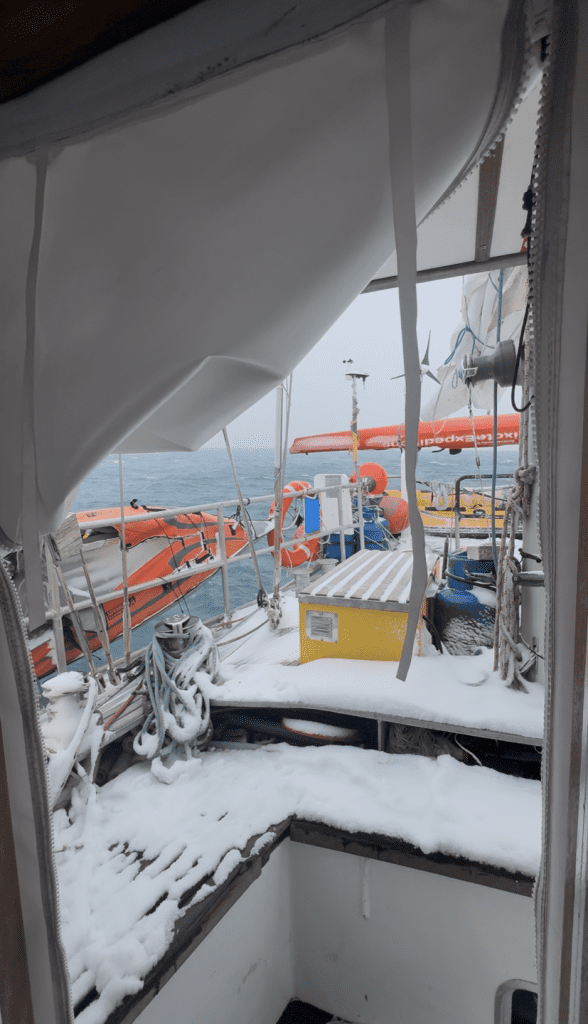
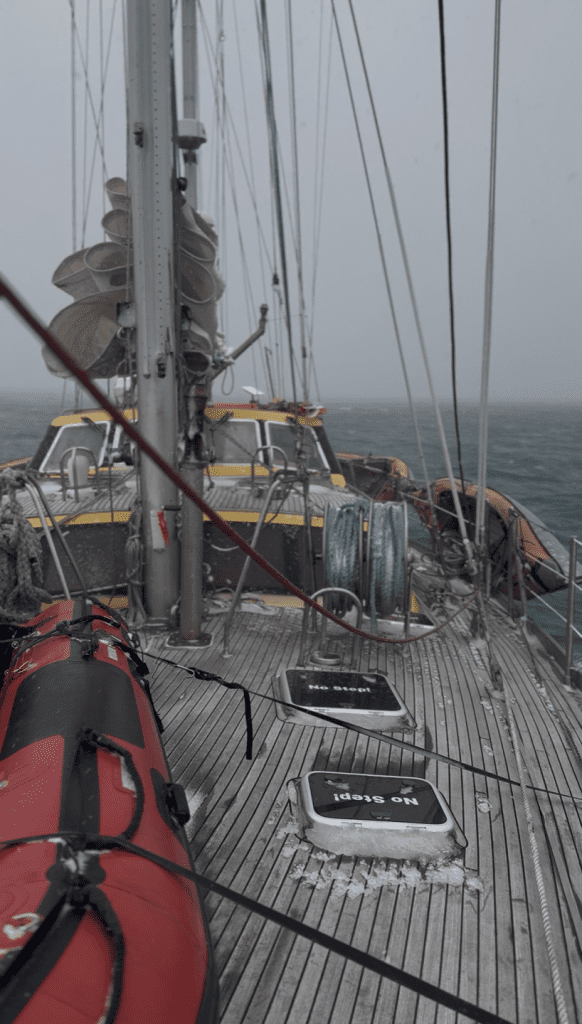
On a small sailboat expedition, there is no pushing through weather like this. You just have to wait it out.
We filled the hours with onboard presentations about early polar explorers, shared travel stories with the crew, and watched the weather move across the landscape from the safety of our protected anchorage.
Real Antarctica expedition travel means adapting to what the continent gives you. Sometimes that means wildlife viewings overload and daily shore landings, other times that means hiding patiently onboard in a sheltered bay.
Day 14 – The Final Day
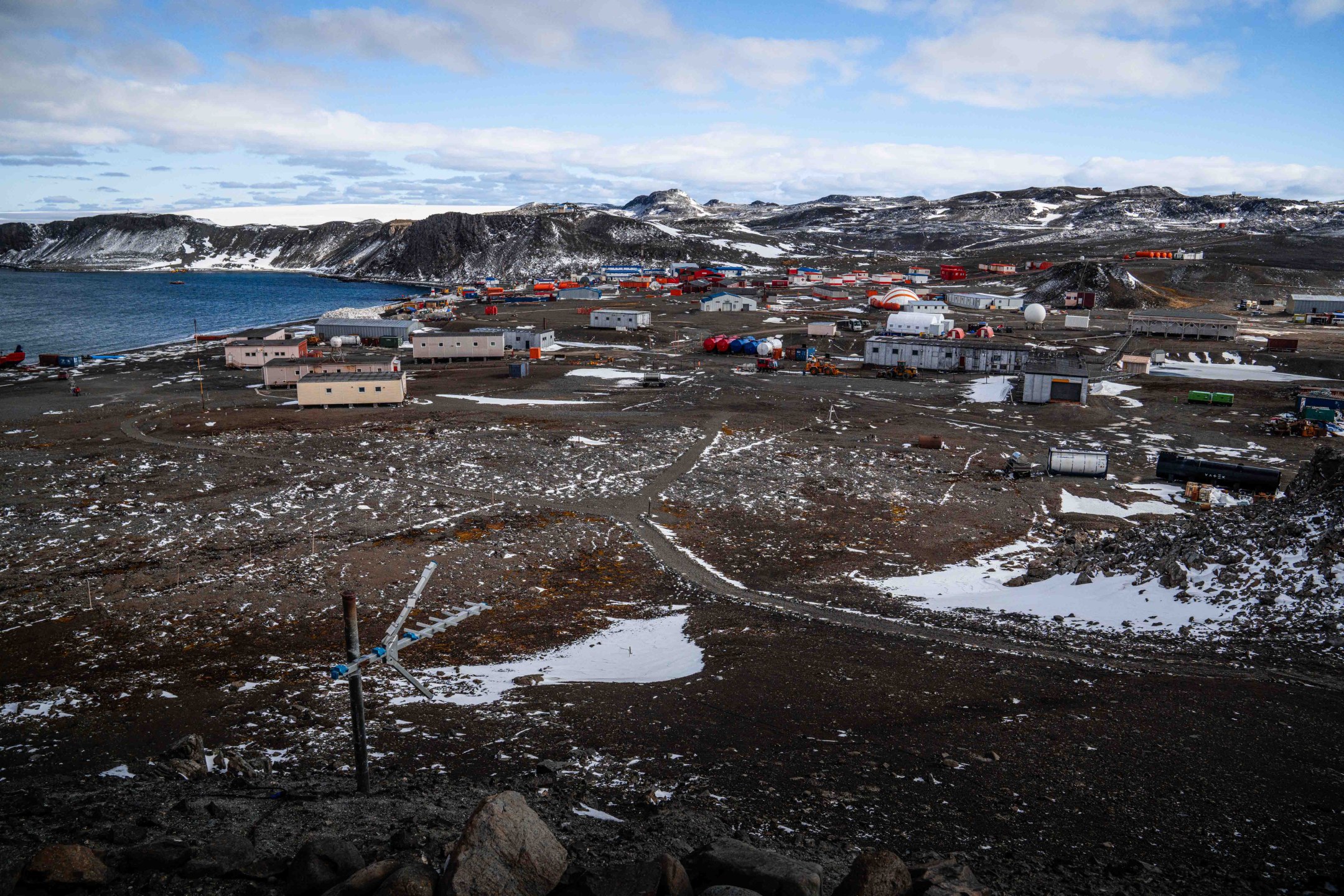
When the storm finally cleared, we made our last landings on King George Island, visiting both China’s Great Wall Station and Russia’s Bellingshausen Station. It was a fitting final glimpse into the international presence that quietly exists on the Frozen Continent, even in one of the most remote places on Earth.
Shortly upon arrival, it was time to board our return flight to Punta Arenas, and just like that, the expedition came to a close. Twelve days earlier we had arrived wide-eyed and full of anticipation, and now we were leaving with deep respect for a place few people will ever experience.
Antarctica is a vast, wild, and unapologetic place, and for a short time, we were lucky enough to exist within its grandeur.
Antarctica Expedition FAQ:
Small Ship Expeditions vs. Large Cruise Ships (and Where Our Expeditions Fit)
What’s the difference between a small ship Antarctica expedition and a large cruise ship? Most Antarctica trips fall into two categories: large cruise ships or small expedition vessels. Larger ships are designed more for scenic cruising, where the focus is often on viewing Antarctica from onboard rather than stepping onto it. Small expedition vessels are built for exploration, shore landings, zodiac outings, and time spent actually moving through the landscape.
Our expeditions aboard Ocean Tramp operate on the smallest possible scale for the most amount of access and flexibility. With only 7 guests, 2 guides, and the professional sailboat crew onboard, the experience feels far less like a cruise and more like a true field expedition shaped by the guests interests and weather, and less on a fixed itinerary.
Both options can be incredible. They’re just very different experiences.
Can large ships land in Antarctica?
Antarctic visits are regulated to protect the environment. Only 100 people can be ashore at a landing site at one time.
Ships carrying more than 500 passengers cannot land
Mid-sized ships may rotate guests ashore
Smaller vessels can usually land everyone more efficiently
Because Ocean Tramp carries so few guests, we don’t have to rotate landing groups or wait for turns. When conditions allow, we go ashore together.
Why do many travelers choose small group Antarctica expeditions?
Antarctica isn’t a place most people travel to simply see, people come here to experience it firsthand.
Smaller groups make it easier to:
- Spend more time on land.
- Move quietly around wildlife.
- Access smaller bays and landing sites.
- Adjust plans to weather and wildlife activity.
With ultra-small expeditions like ours, flexibility becomes our biggest advantage. Routes aren’t fixed months in advance, we can adjust and evolve with the conditions we encounter each day.
Are larger Antarctica expedition ships more comfortable?
Larger ships often offer more onboard amenities and entertainment spaces. Smaller expedition vessels, like Ocean Tramp, are built with a different priority to access places larger ships simply can’t reach.
Comfort in Antarctica (for us anyways) isn’t about onboard hot tubs or lounges. It’s about being warm and sheltered, anchored in a quiet bay with no other vessels in sight.
Is a small ship Antarctica expedition worth it?
That depends on what kind of trip you want.
If you want panoramic viewing and a cruise-style experience, a large ship can be a great fit.
If you want to step onto the continent, paddle among icebergs, watch wildlife at eye level, and travel at the pace of the environment, smaller expedition vessels tend to offer far more opportunity to do exactly that.
What’s the best way to experience Antarctica?
There isn’t one “best” way to experience Antarctica, only the way that matches what you want to get out of your trip.
Some travelers prefer the onboard comfort and cruise ship amenities. Others want immersion, flexibility, and time outside in the landscape.
Travelers who choose expeditions aboard vessels like Ocean Tramp usually have in common that they want to experience Antarctica up close and personal, not just observe it from a distance.


