There’s a version of Landmannalaugar that most people know very well.
Rhyolite hills streaked with colour. Busy trails. Thermal vents. Bustling cabins with a nearby hot spring, steam gently rising from the water surface as hikers cycle through on tight summer timelines.
But there’s another side of this famous region in the Iceland Highlands that most travellers will never experience…
And that’s Landmannalaugar in winter.
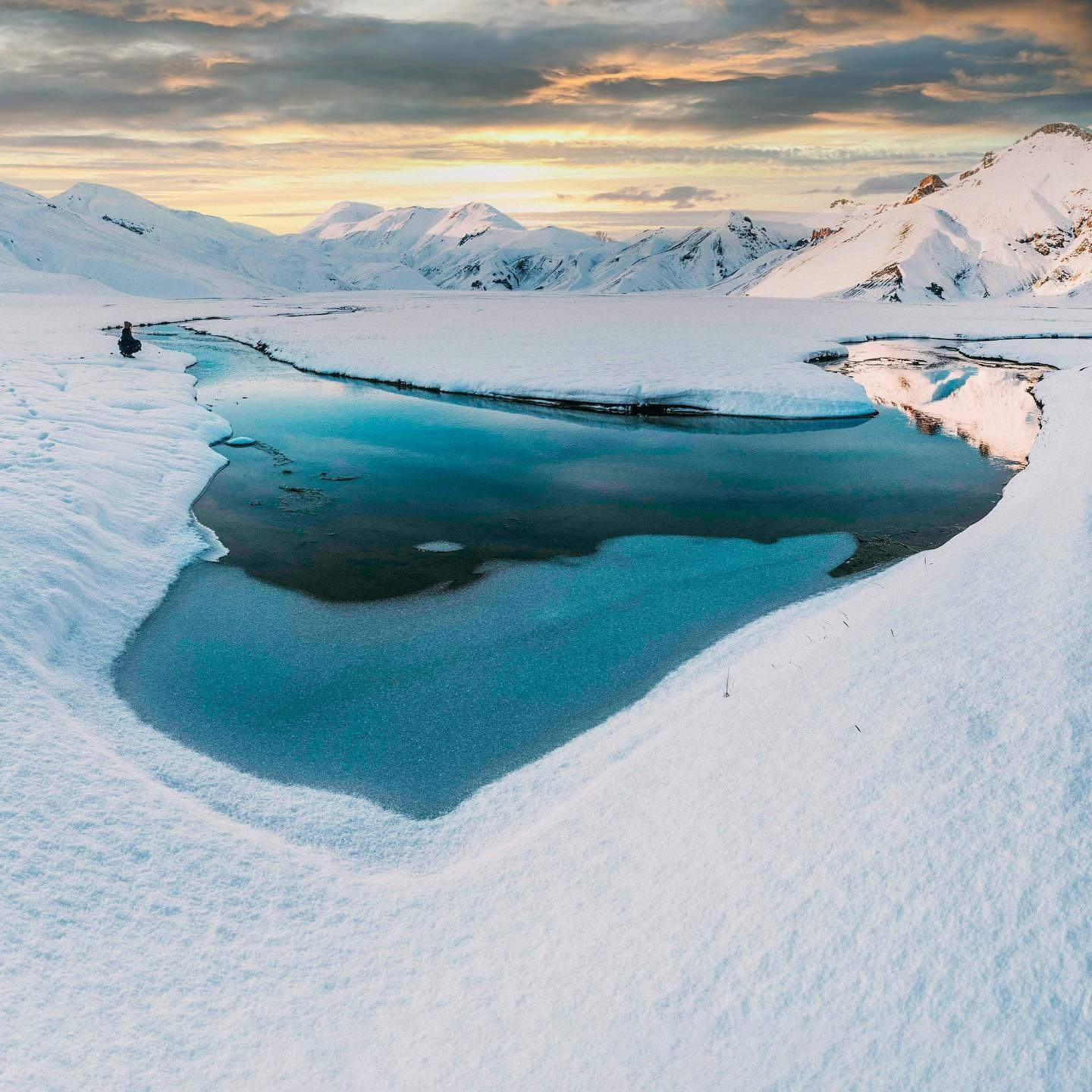
When winter settles in, Iceland becomes a different world entirely. Snow blankets the landscape. Roads close. The crowds disappear. And what remains is something raw, quiet, and more demanding… A place that no longer accommodates to your schedules or expectations, and doesn’t particularly care whether you’re ready for it.
In late October 2025, we were given a narrow window between winter weather systems to head deep into the Icelandic Highlands with a private expedition group. The plan was simple: to return to a place the Amarok Adventures crew know like the back of our hand and experience it under entirely different conditions.
What we found was a landscape that felt both familiar and completely unrecognizable, and a winter expedition that exceeded every expectation.
Pre-Trip: Winter Weather in Iceland Changes the Plan
On October 28, a powerful snowstorm rolled across Iceland, dumping a historical amount of fresh snow across Reykjavík, the Highlands, and everywhere in between, transforming the country almost overnight. The kind of storm that usually shuts things down rather than opening them up.
For most travellers, a snowfall like this means road closures, cancelled plans, and turning groups around. But with the right licensing, permissions, and deep experience operating in the Icelandic backcountry (including years spent working as a hut warden in the Icelandic Highlands) we were allowed to safely take advantage of the winter conditions rather than avoid them.
The original plan was a three-day private hiking expedition through Landmannalaugar and Thórsmörk. But with the sudden snowpack and shifting conditions, we spoke openly with the group about the opportunity in front of us. Instead of forcing the original plan, everyone agreed to lean into what winter had just offered, and spend the full trip snowshoeing in the famous Landmannalaugar region instead.
Day 1: Travel Day into the Icelandic Highlands in Winter
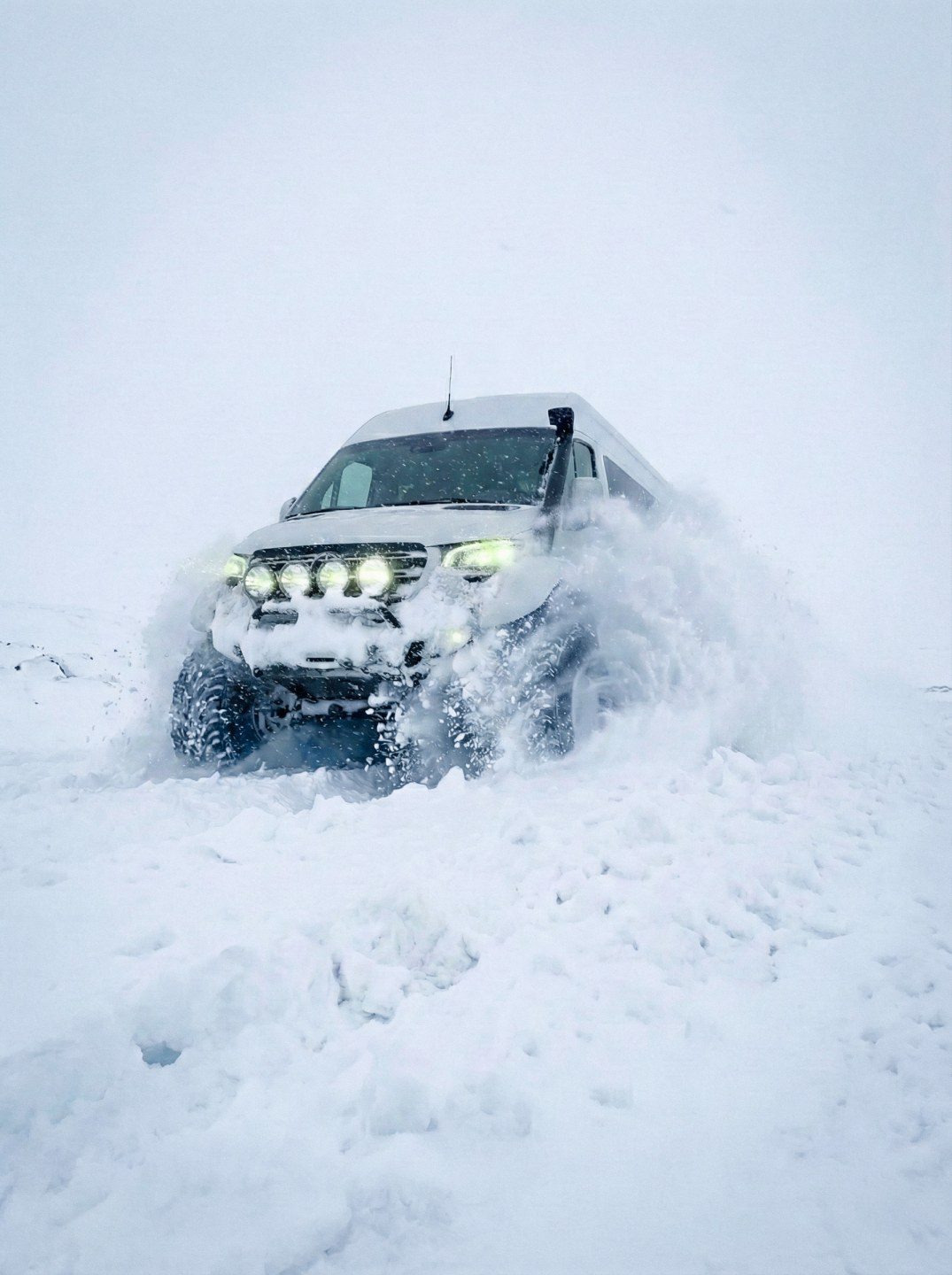
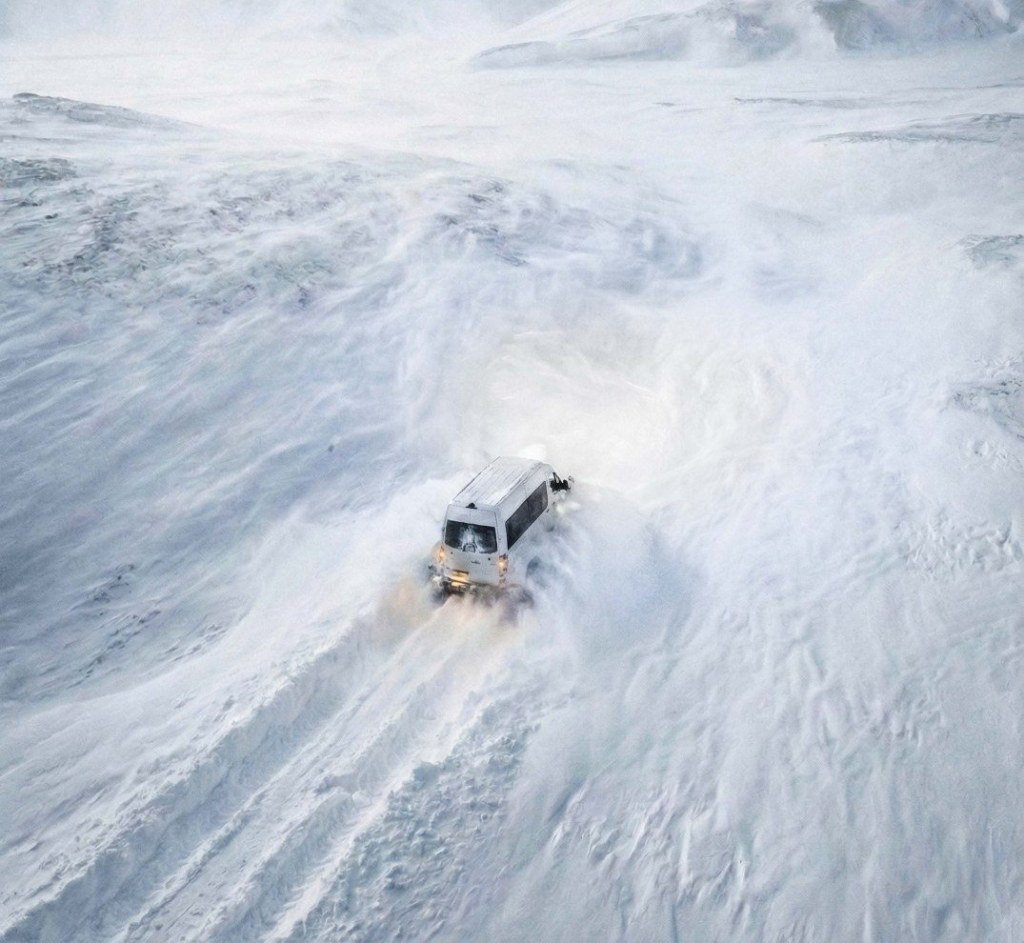
We left Reykjavík early under grey skies, the city already dusted with fresh snow. We began our drive in a standard Sprinter van, but once we arrived at Hrauneyjar Highland Center, the last outpost before the interior Highland, we switched vehicles with a modified Sprinter van on massive 46” tires to carry us deeper and safely into the highlands., built specifically for winter conditions and unplowed roads.
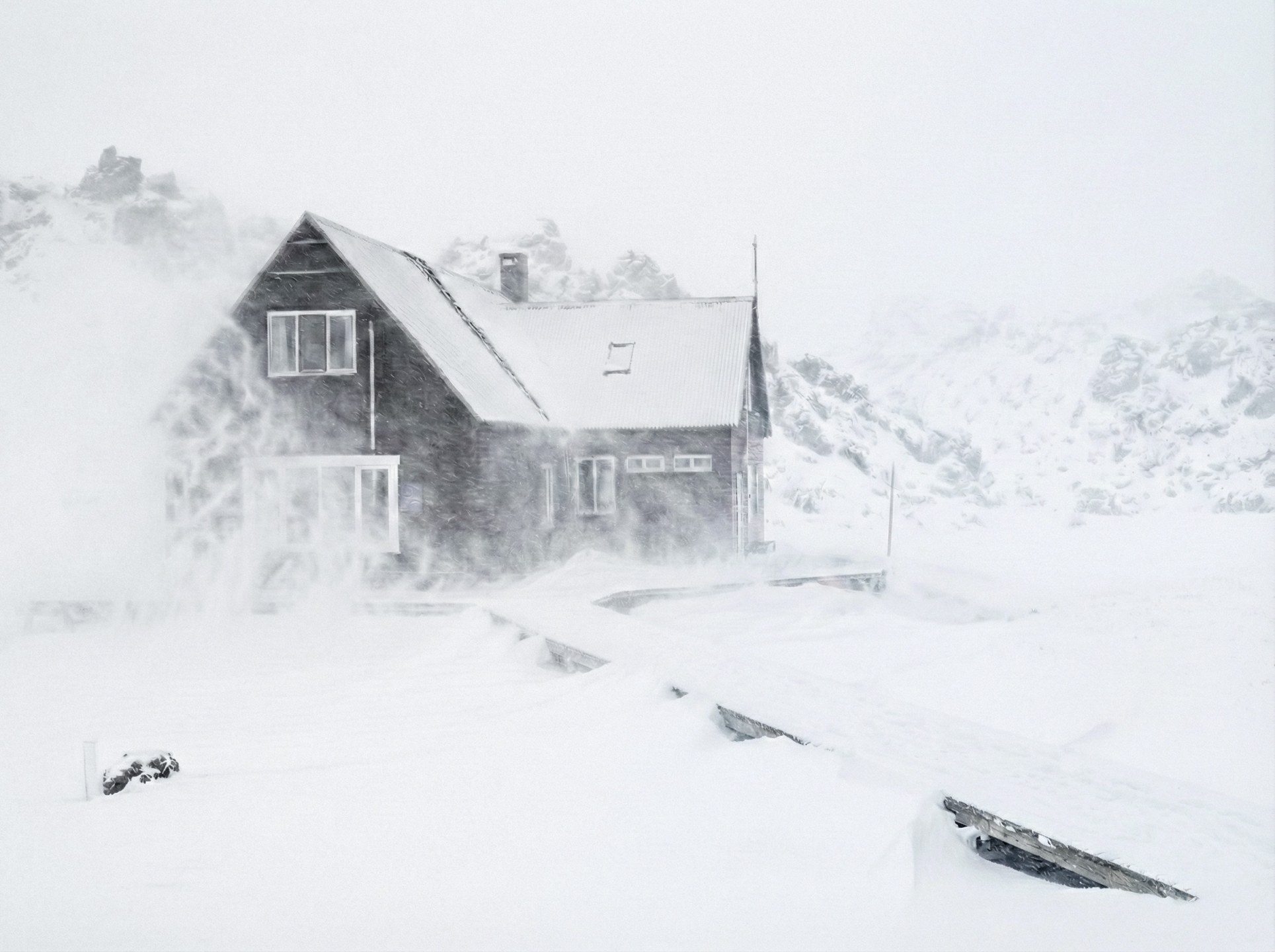
Traveling into the Icelandic Highlands in winter is never straightforward. The storm had passed, but the winds still remained. Visibility came and went, and much of the drive relied on our GPS rather than what we could see through the windshield. Snow drifts swallowed familiar landmarks. Progress was slow, steady, careful.
It took nearly six hours to reach Landmannalaugar in these winter conditions.
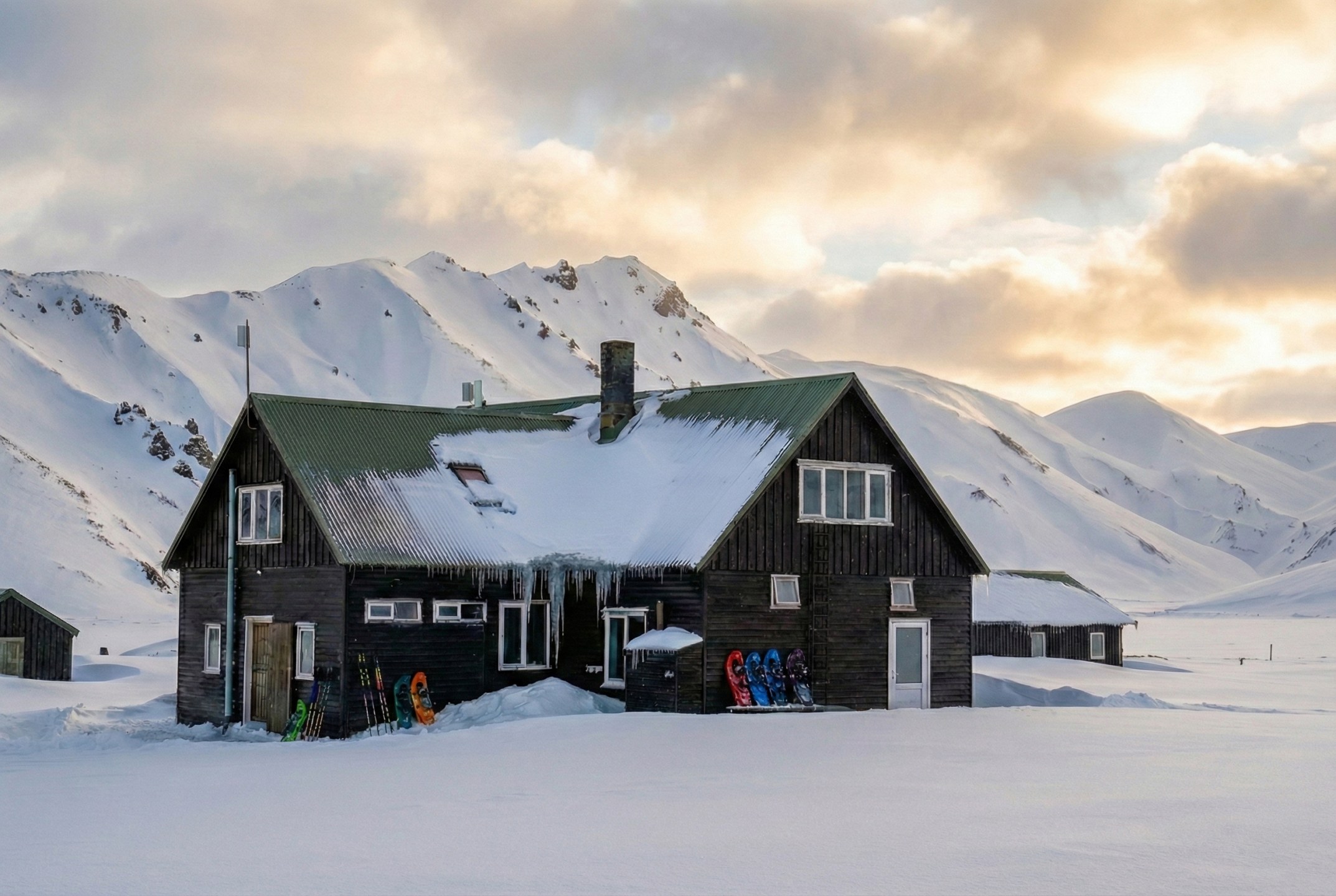
But once we arrived with the last light of the day fading, we realized that we were the only ones at the hut! For those of you who have joined our summer Hidden Trails hiking expedition, you’ll know just how rare this is.
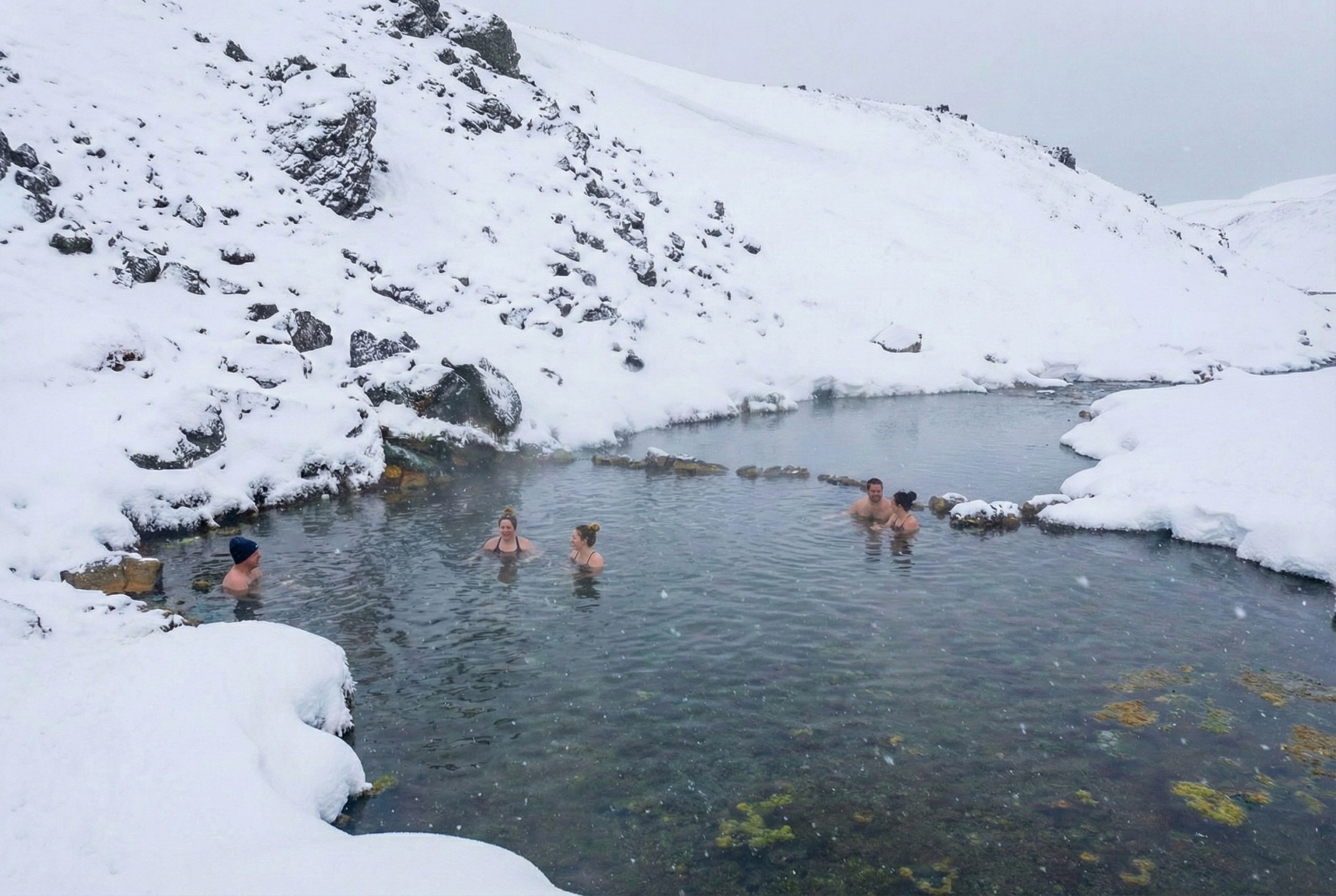
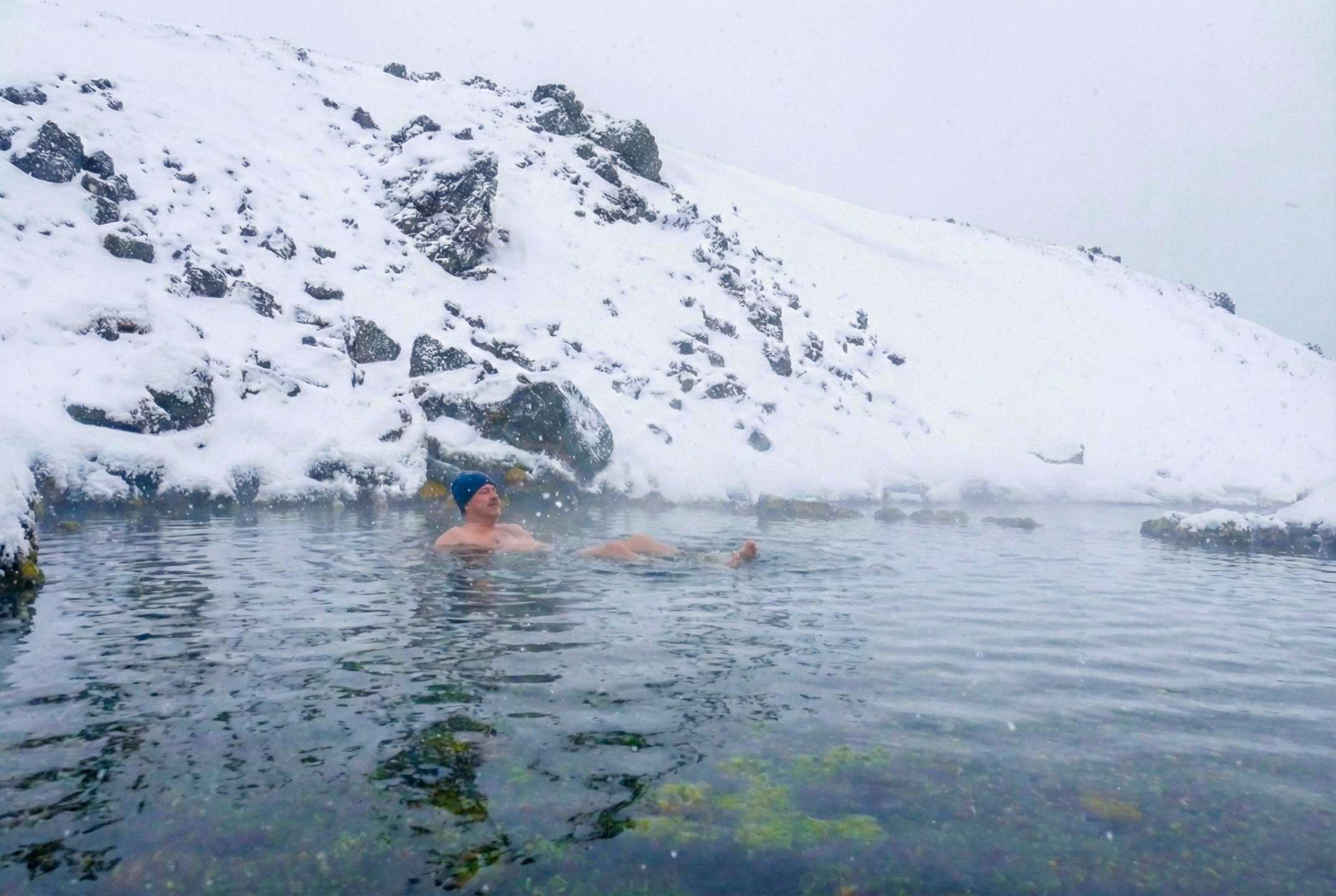
That evening, we fired up the BBQ and grilled salmon for the group. Later, some guests headed out to the hot springs under the night sky, hoping for a glimpse of the northern lights.
The elusive aurora borealis stayed hidden that night, but we still had one more night ahead of us and plenty of reason to stay hopeful.
Day 2: Snowshoeing and Winter Skills in Landmannalaugar
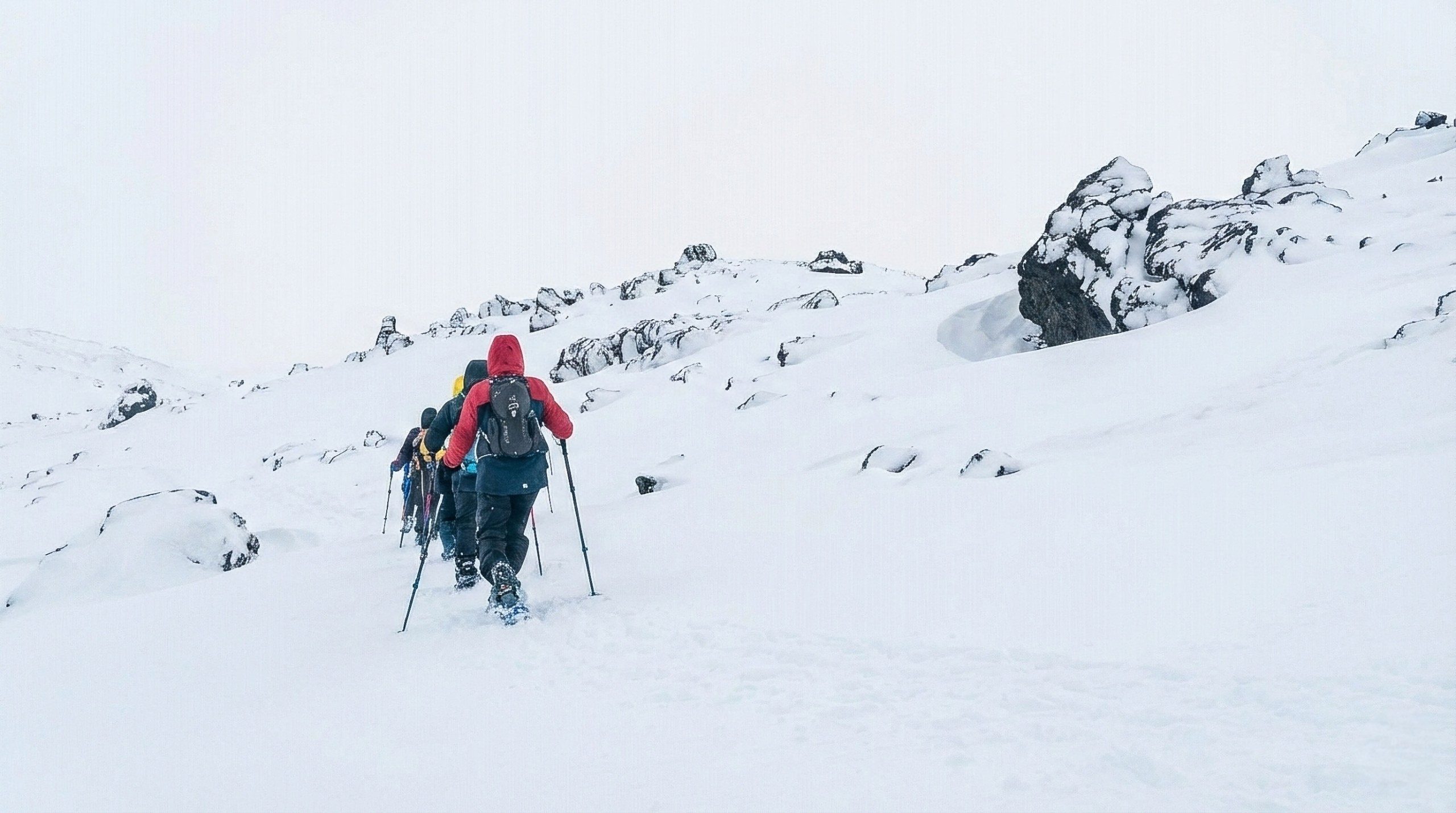
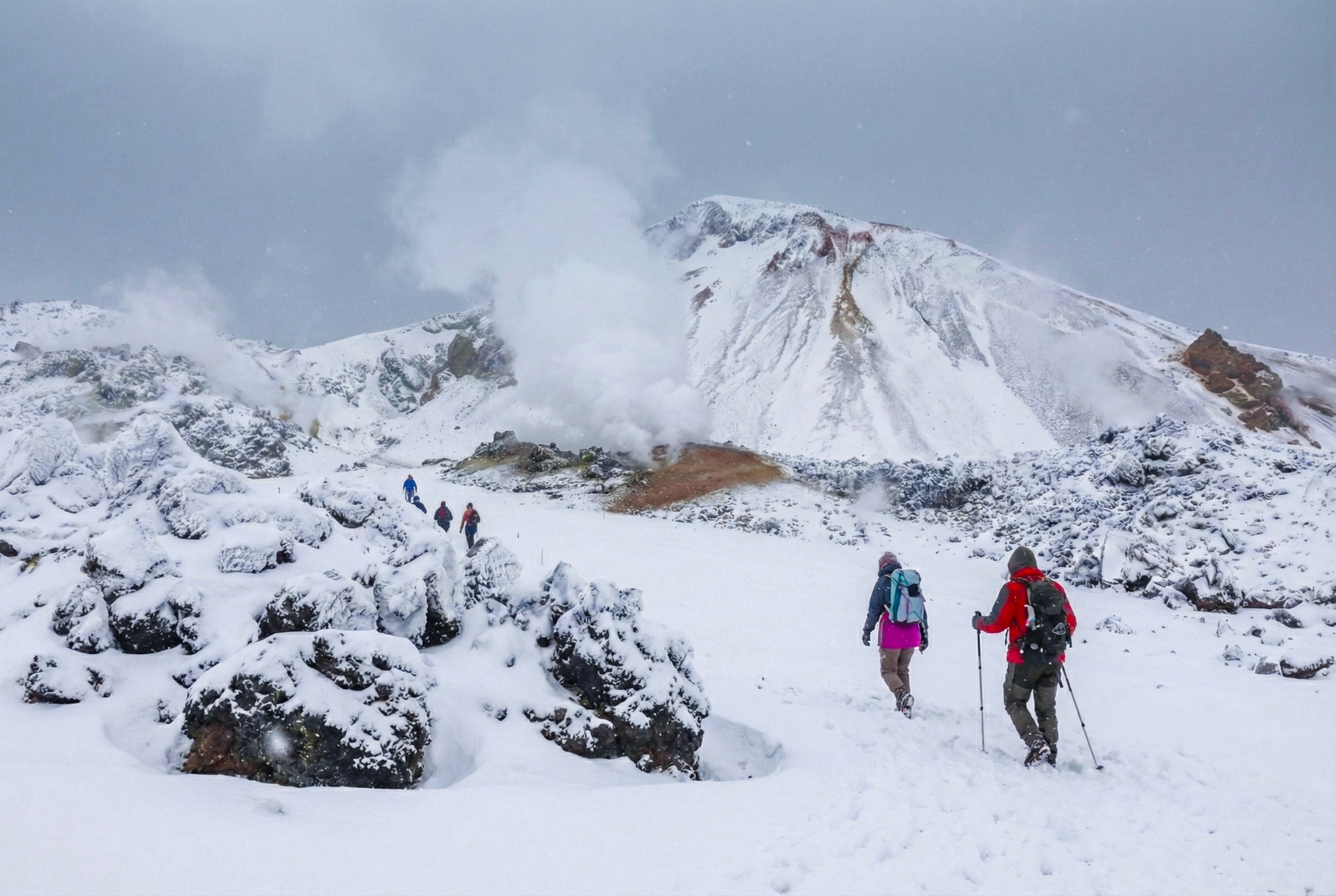
We woke to a warm, quiet hut, heated by geothermal energy rising from deep beneath the snow-covered landscape outside. After an early breakfast, we layered up, strapped on our snowshoes, and headed out into the Laugahraun lava fields to begin a full day of winter hiking in Landmannalaugar.
Snow softened the sharp edges of the ancient lava formations, transforming the terrain into something both familiar and otherworldly. We moved steadily across the Laugahraun lava fields, and made our way toward Brennisteinsalda, the sulphur-streaked mountain that looms above the valley. Even in winter, steam rose from the thermal vents in places, reminding us the Icelandic landscapes are still very much active beneath the surface despite their new winter coat.
By early afternoon, we returned to the hut for a late lunch, where the guides prepared a hot lamb soup for the group, a classic Icelandic dish that is perfectly suiting after hours spent moving through winter wind and snow.
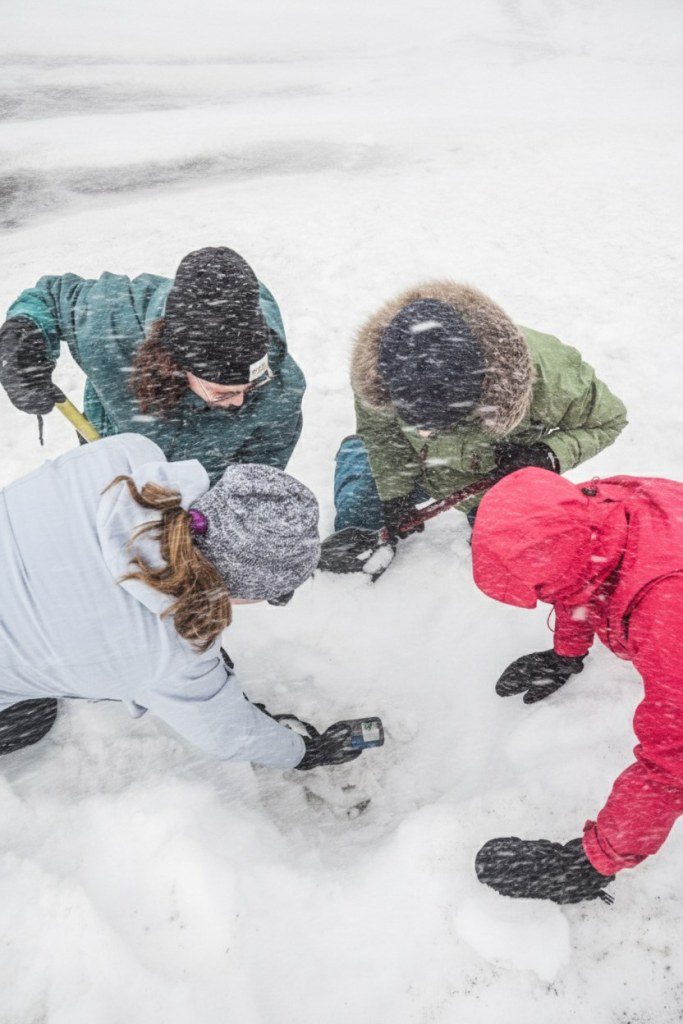
That afternoon, the group split into two teams for an avalanche rescue simulation. Using maps, beacons, probes, and shovels, the goal was to locate and dig out a “missing skier” within a set time limit. As if on cue, the weather turned again on us. The wind picked up, visibility dropped, and the exercise quickly felt less like a drill and more like a real-world scenario.
It was challenging, fast-paced, and surprisingly fun! Everyone played their part, working together under near whiteout conditions. This was exactly the kind of experience that deepens our confidence and trust when traveling in backcountry terrain, let alone in the heart of Iceland’s winter.
After another warm dinner, some headed back out to the hot springs. As the group made their way toward the hut later that evening, the sky finally cleared. We grabbed extra layers, climbed back into our boots, and hiked up into the lava fields once more.
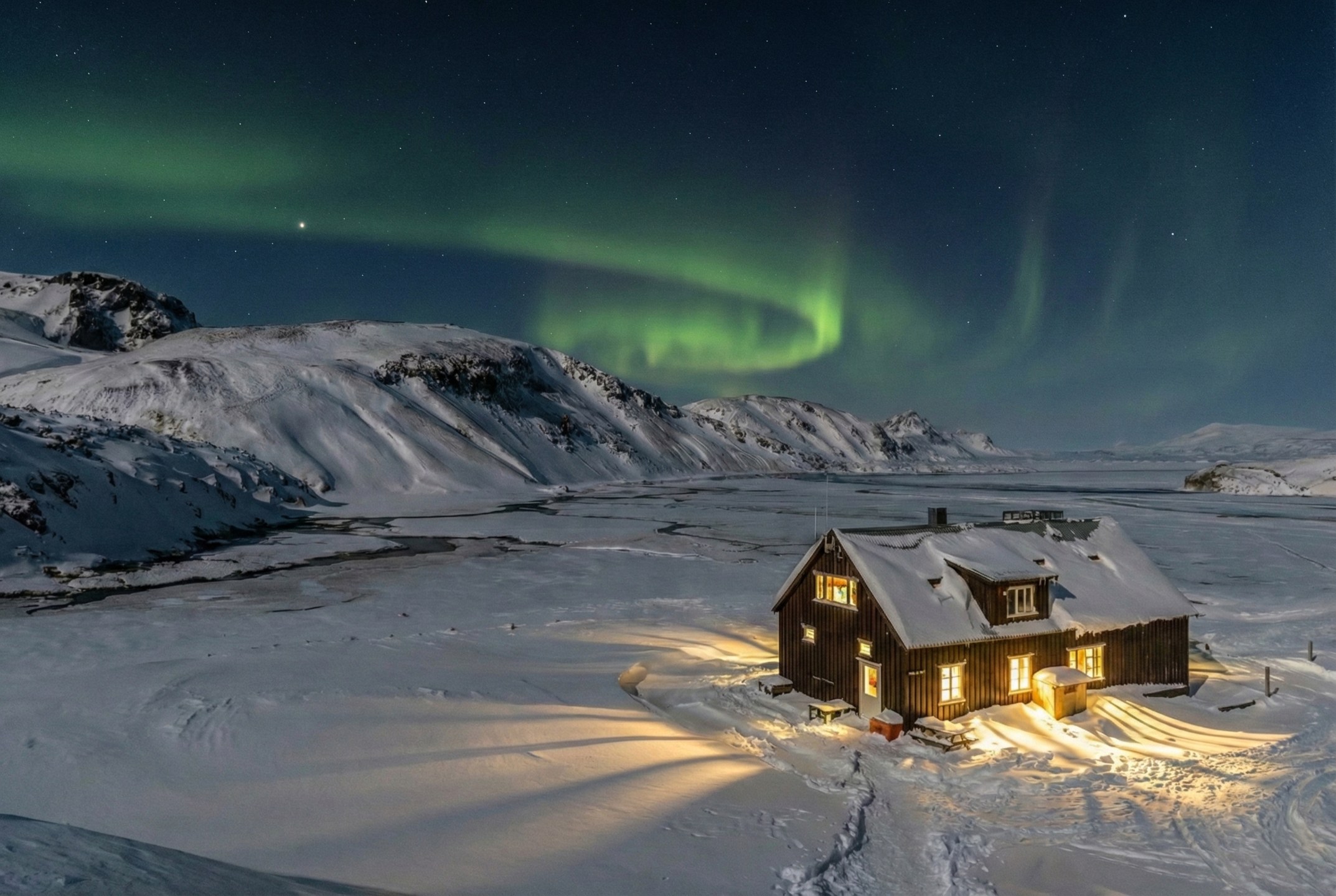
This time, the northern lights came alive.
Green ribbons of light danced across the sky above the snow-covered landscape. We sat together in silence, watching one of the world’s most spectacular natural phenomena unfold overhead. An unforgettable end to a day shaped entirely by winter in the Icelandic Highlands.
Day 3: Return to Reykjavík
The next morning, we packed up, swept the hut, and began the journey back to Reykjavík. The landscape looked entirely different again in the daylight, but on this day things were calmer, softer, as if winter had briefly allowed us safe passage back to Iceland’s capital city before closing the door behind us.
Landmannalaugar is one of Iceland’s most popular hiking places. But adventuring here in winter is an entirely different experience, even for those who know the region super well. There are no crowds, with the huts largely to ourselves. The hiking is challenging, rewarding and stunning all the same. And of course, a huge highlight are the empty hot springs and northern lights sightings without another soul in sight.
And for those moments when everything aligns, winter hiking in Iceland offers something summer never can.
Winter Travel in Iceland: What to Know Before You Go
We like to say there’s no wrong time of year to visit Iceland. Winter brings snow-covered landscapes, quiet trails, and the chance to witness the northern lights under some of the darkest skies of the year.
But winter travel in Iceland also demands a higher level of preparation, experience, and judgment, especially when venturing into the country’s remote wilderness and Highland regions.
Shorter days with rapidly changing weather and limited access mean winter isn’t the season to just wing it. Understanding these realities and choosing the right level of support can make all the difference for your winter travels in Iceland.
Is it safe to travel in Iceland during winter?
Yes, but with the right experience and planning. Winter travel in Iceland comes with rapidly changing weather, limited daylight, and road closures that can happen with little notice. For this reason, we strongly recommend traveling with an experienced guide when exploring Iceland in winter, particularly in remote or highland areas.
A guided winter expedition provides:
- Local, season-specific expertise to assess weather, snowpack, and road conditions in real time.
- Experienced decision-making when conditions change and plans need to adapt.
- Appropriate vehicles and safety equipment for winter travel in the Icelandic Highlands.
- A safer, more immersive experience, allowing you to focus on the journey rather than logistics.
- Safety in winter requires knowing when to move, when to wait, and how to adapt responsibly.
What makes winter hiking in Iceland different from summer?
Winter hiking in Iceland is slower and far more conditions-dependent than summer travel. Snow, wind, and reduced visibility all play a role, and routes that can be straightforward in summer can feel entirely different in winter.
That said, winter also brings stunning winter scenery and access to places like Landmannalaugar without crowds, something that simply doesn’t exist in peak summer season.
What makes winter hiking in Iceland different from summer?
Winter hiking in Iceland is slower and far more conditions-dependent than summer travel. Snow, wind, and reduced visibility all play a role, and routes that can be straightforward in summer can feel entirely different in winter.
That said, winter also brings stunning winter scenery and access to places like Landmannalaugar without crowds, something that simply doesn’t exist in peak summer season.
Do you need special equipment for winter travel in Iceland?
Yes. Winter travel often requires snowshoes or crampons, avalanche safety equipment, and proper winter layers designed for cold, wind, and moisture. On guided winter expeditions, technical gear is typically provided or clearly outlined ahead of time. Knowing how to use this equipment, and traveling with guides who do, is essential.
Are roads and access limited in winter?
Absolutely. Many highland roads close entirely during winter, and access to places like Landmannalaugar depends on conditions, special permits and vehicle capability.
Winter access is never guaranteed, which is why flexibility is key. Long travel days and slower progress are all part of winter travel in the Icelandic Highlands.
Will I see the northern lights on a winter trip?
Northern lights sightings are never guaranteed. They depend on solar activity, cloud cover, and timing. Winter increases the chances due to longer nights, but seeing the aurora is always a bonus, not the goal.
That said, fewer crowds and remote locations make winter one of the most rewarding times to experience them when conditions align.
Is winter travel in Iceland suitable for everyone?
To be blunt… No, we don’t think winter travel in Iceland isn’t for everyone, and that’s okay! These trips are best suited for travelers who are comfortable with changing plans, variable weather, and days shaped by conditions rather than fixed itineraries.
If you’re drawn to the idea of exploring some of Iceland’s most popular regions with less crowds, exploring quieter landscapes, and moving through the landscape at the pace winter allows, then you should absolutely consider a winter trip to Iceland. The rewards of a challenging journey are simply unmatched.
Why choose a guided winter expedition in Iceland?
Guided winter expeditions provide local knowledge and highly calculated logistical support that’s difficult to replicate independently.
In winter, this expertise of the land and special access allows you to reach these remote places safely and fully experience the Icelandic Highlands when most travelers can’t. Your guides will always have a back up plan if the weather doesn’t obey, so you can focus more on your experience without the headache of planning.